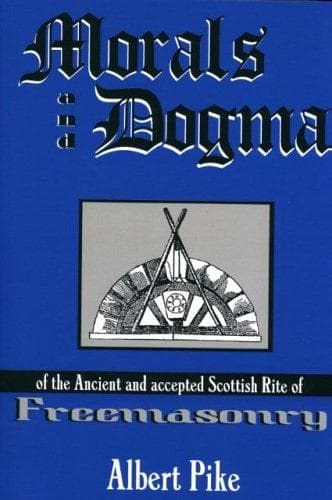
Morals and Dogma of the Ancient and Accepted Scottish Rite of FreemasonryPike, Albert
Religion
Morals and Dogma of the Ancient and Accepted Scottish Rite of Freemasonry
Pike, Albert
Freemasons
We may be able to say--"_This_ man has lied, has pilfered, has forged,
has embezzled moneys intrusted to him; and _that_ man has gone through
life with clean hands." But we cannot say that the former has not
struggled long, though unsuccessfully, against temptations under which
the second would have succumbed without an effort. We can say which has
the cleanest _hands_ before _man_; but not which has the cleanest _soul_
before God. We may be able to say, _this_ man has committed adultery,
and _that_ man has been ever chaste; but we cannot tell but that the
innocence of one may have been due to the coldness of his heart, to the
absence of a motive, to the presence of a fear, to the slight degree of
the temptation; nor but that the fall of the other may have been
preceded by the most vehement self-contest, caused by the most
over-mastering frenzy, and atoned for by the most hallowing repentance.
Generosity as well as niggardliness may be a mere yielding to native
temperament; and in the eye of Heaven, a long life of beneficence in one
man may have cost less effort, and may indicate less virtue and less
sacrifice of interest, than a few rare hidden acts of kindness wrung by
duty out of the reluctant and unsympathizing nature of the other. There
may be more real merit, more self-sacrificing effort, more of the
noblest elements of moral grandeur, in a life of failure, sin, and
shame, than in a career, to our eyes, of stainless integrity.
When we condemn or pity the fallen, how do we know that, tempted like
him, we should not have fallen like him, as soon, and perhaps with less
resistance? How can we know what _we_ should do if we were out of
employment, famine crouching, gaunt, and hungry, on our fireless hearth,
and our children wailing for bread? _We fall not because we are not
enough tempted!_ He that _hath_ fallen may be at heart as honest as we.
How do we know that _our_ daughter, sister, wife, could resist the
abandonment, the desolation, the distress, the temptation, that
sacrificed the virtue of their poor abandoned sister of shame? Perhaps
they also have not fallen, because they have not been sorely tempted!
Wisely are we directed to pray that we may not be exposed to temptation.
Human justice must be ever uncertain. How many judicial murders have
been committed through ignorance of the phenomena of insanity! How many
men hung for murder who were no more murderers at heart than the jury
that tried and the judge that sentenced them! It may well be doubted
whether the administration of human laws, in every country, is not one
gigantic mass of injustice and wrong. God seeth not as man seeth; and
the most abandoned criminal, black as he is before the world, may yet
have continued to keep some little light burning in a corner of his
soul, which would long since have gone out in that of those who walk
proudly in the sunshine of immaculate fame, if they had been tried and
tempted like the poor outcast.
Public-domain text, read in full here on John Shaqi.
Reviews
Reviews
No reviews yet
Be the first to share your thoughts on this work.
Elsewhere in the archive
Join the Discussion
Join the discussion
Sign in to leave a comment or review.
Sign InorCreate an account