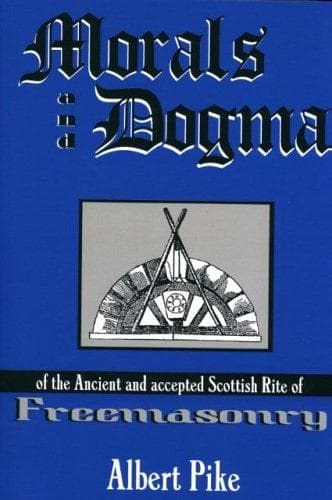
Morals and Dogma of the Ancient and Accepted Scottish Rite of FreemasonryPike, Albert
Religion
Morals and Dogma of the Ancient and Accepted Scottish Rite of Freemasonry
Pike, Albert
Freemasons
Masonry utters no impracticable and extravagant precepts, certain,
because they are so, to be disregarded. It asks of its initiates nothing
that it is not possible and even easy for them to perform. Its teachings
are eminently practical; and its statutes can be obeyed by every just,
upright, and honest man, no matter what his faith or creed. Its object
is to attain the greatest practical good, without seeking to make men
perfect. It does not meddle with the domain of religion, nor inquire
into the mysteries of regeneration. It teaches those truths that are
written by the finger of God upon the heart of man, those views of duty
which have been wrought out by the meditations of the studious,
confirmed by the allegiance of the good and wise, and stamped as
sterling by the response they find in every uncorrupted mind. It does
not dogmatize, nor vainly imagine dogmatic certainty to be attainable.
Masonry does not occupy itself with crying down this world, with its
splendid beauty, its thrilling interests, its glorious works, its noble
and holy affections; nor exhort us to detach our hearts from this
earthly life, as empty, fleeting, and unworthy, and fix them upon
Heaven, as the only sphere deserving the love of the loving or the
meditation of the wise. It teaches that man has high duties to perform,
and a high destiny to fulfill, on this earth; that this world is not
merely the portal to another; and that this life, though not our only
one, is an integral one, and the particular one with which we are here
meant to be concerned; that the Present is our scene of action, and the
Future for speculation and for trust; that man was sent upon the earth
to live in it, to enjoy it, to study it, to love it, to embellish it, to
make the most of it. It is his country, on which he should lavish his
affections and his efforts. It is here his influences are to operate. It
is his house, and not a tent; his home, and not _merely_ a school. He is
sent into this world, not to be constantly hankering after, dreaming of,
preparing for another; but to do his duty and fulfill his destiny on
this earth; to do all that lies in his power to improve it, to render it
a scene of elevated happiness to himself, to those around him, to those
who are to come after him. His life here is _part_ of his immortality;
and this world, also, is among the stars.
Public-domain text, read in full here on John Shaqi.
Reviews
Reviews
No reviews yet
Be the first to share your thoughts on this work.
Elsewhere in the archive
Join the Discussion
Join the discussion
Sign in to leave a comment or review.
Sign InorCreate an account