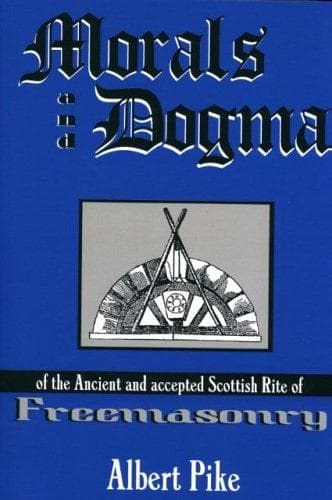
Morals and Dogma of the Ancient and Accepted Scottish Rite of FreemasonryPike, Albert
Religion
Morals and Dogma of the Ancient and Accepted Scottish Rite of Freemasonry
Pike, Albert
Freemasons
How often has an act of charity, costing the doer little, given to the
world a great painter, a great musician, a great inventor! How often has
such an act developed the ragged boy into the benefactor of his race! On
what small and apparently unimportant circumstances have turned and
hinged the fates of the world's great conquerors. There is no law that
limits the returns that shall be reaped from a single good deed. The
widow's mite may not only be as acceptable to God, but may produce as
great results as the rich man's costly offering. The poorest boy, helped
by benevolence, may come to lead armies, to control senates, to decide
on peace and war, to dictate to cabinets; and his magnificent thoughts
and noble words may be law many years hereafter to millions of men yet
unborn.
But the opportunity to effect a great good does not often occur to any
one. It is worse than folly for one to lie idle and inert, and expect
the accident to befall him, by which his influences shall live forever.
He can expect that to happen, only in consequence of one or many or all
of a long series of acts. He can expect to benefit the world only as men
attain other results; by continuance by persistence, by a steady and
uniform habit of laboring for the enlightenment of the world, to the
extent of his means and capacity.
For it is, in all instances, by steady labor, by giving enough of
application to our work, and having enough of time for the doing of it,
by regular pains-taking, and the plying of constant assiduities, and not
by any process of legerdemain, that we secure the strength and the
staple of real excellence. It was thus that Demosthenes, clause after
clause, and sentence after sentence, elaborated to the uttermost his
immortal orations. It was thus that Newton pioneered his way, by the
steps of an ascending geometry, to the mechanism of the Heavens, and Le
Verrier added a planet to our Solar System.
It is a most erroneous opinion that those who have left the most
stupendous monuments of intellect behind them, were not differently
exercised from the rest of the species, but only differently gifted;
that they signalized themselves only by their talent, and hardly ever by
their industry; for it is in truth to the most strenuous application of
those commonplace faculties which are diffused among all, that they are
indebted for the glories which now encircle their remembrance and their
name.
Public-domain text, read in full here on John Shaqi.
Reviews
Reviews
No reviews yet
Be the first to share your thoughts on this work.
Elsewhere in the archive
Join the Discussion
Join the discussion
Sign in to leave a comment or review.
Sign InorCreate an account