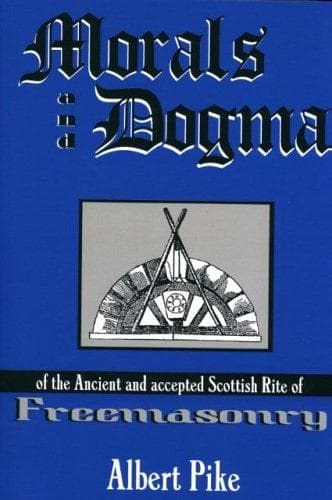
Morals and Dogma of the Ancient and Accepted Scottish Rite of FreemasonryPike, Albert
Religion
Morals and Dogma of the Ancient and Accepted Scottish Rite of Freemasonry
Pike, Albert
Freemasons
Still, perhaps half of it is his own; and, in incorporating here the
thoughts and words of others, he has continually changed and added to
the language, often intermingling, in the same sentences, his own words
with theirs. It not being intended for the world at large, he has felt
at liberty to make, from all accessible sources, a Compendium of the
Morals and Dogma of the Rite, to re-mould sentences, change and add to
words and phrases, combine them with his own, and use them as if they
_were_ his own, to be dealt with at his pleasure and so availed of as to
make the whole most valuable for the purposes intended. He claims,
therefore, little of the merit of authorship, and has not cared to
distinguish his own from that which he has taken from other sources,
being quite willing that every portion of the book, in turn, may be
regarded as borrowed from some old and better writer.
The teachings of these Readings are not sacramental, so far as they go
beyond the realm of Morality into those of other domains of Thought and
Truth. The Ancient and Accepted Scottish Rite uses the word "Dogma" in
its true sense, of _doctrine_, or _teaching_; and is not _dogmatic_ in
the odious sense of that term. Every one is entirely free to reject and
dissent from whatsoever herein may seem to him to be untrue or unsound.
It is only required of him that he shall weigh what is taught, and give
it fair hearing and unprejudiced judgment. Of course, the ancient
theosophic and philosophic speculations are not embodied as part of the
_doctrines_ of the Rite; but because it is of interest and profit to
know what the Ancient Intellect thought upon these subjects, and because
nothing so conclusively proves the radical difference between our human
and the animal nature, as the capacity of the human mind to entertain
such speculations in regard to itself and the Deity. But as to these
opinions themselves, we may say, in the words of the learned Canonist,
Ludovicus Gomez: _"Opiniones secundum varietatem, temporum senescant et
intermoriantur, aliæque diversæ vel prioribus contrarioe renescantur et
deinde pubescant."_
Titles of Degrees as herein given have in some instances been changed.
Correct titles are as follows:
Public-domain text, read in full here on John Shaqi.
Reviews
Reviews
No reviews yet
Be the first to share your thoughts on this work.
Join the Discussion
Join the discussion
Sign in to leave a comment or review.
Sign InorCreate an account