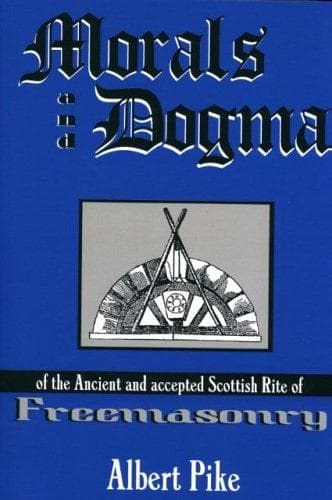
Morals and Dogma of the Ancient and Accepted Scottish Rite of FreemasonryPike, Albert
Religion
Morals and Dogma of the Ancient and Accepted Scottish Rite of Freemasonry
Pike, Albert
Freemasons
The Mason does not pretend to dogmatic certainty, nor vainly imagine
such certainty attainable. He considers that if there were no written
revelation, he could safely rest the hopes that animate him and the
principles that guide him, on the deductions of reason and the
convictions of instinct and consciousness. He can find a sure foundation
for his religious belief, in these deductions of the intellect and
convictions of the heart. For reason proves to him the existence and
attributes of God; and those spiritual instincts which he feels are the
voice of God in his soul, infuse into his mind a sense of his relation
to God, a conviction of the beneficence of his Creator and Preserver,
and a hope of future existence; and his reason and conscience alike
unerringly point to virtue as the highest good, and the destined aim and
purpose of man's life.
He studies the wonders of the Heavens, the frame-work and revolutions of
the Earth, the mysterious beauties and adaptations of animal existence,
the moral and material constitution of the human creature, so fearfully
and wonderfully made; and is satisfied that God IS; and that a Wise and
Good Being is the author of the starry Heavens above him, and of the
moral world within him; and his mind finds an adequate foundation for
its hopes, its worship, its principles of action, in the far-stretching
Universe, in the glorious firmament, in the deep, full soul, bursting
with unutterable thoughts.
These are truths which every reflecting mind will unhesitatingly
receive, as not to be surpassed, nor capable of improvement; and fitted,
if obeyed, to make earth indeed a Paradise, and man only a little lower
than the angels. The worthlessness of ceremonial observances, and the
necessity of active virtue; the enforcement of purity of heart as the
security for purity of life, and of the government of the thoughts, as
the originators and forerunners of action; universal philanthropy,
requiring us to love all men, and to do unto others that and that only
which we should think it right, just, and generous for them to do unto
us; forgiveness of injuries; the necessity of self-sacrifice in the
discharge of duty; humility; genuine sincerity, and _being_ that which
we _seem_ to be; all these sublime precepts need no miracle, no voice
from the clouds, to recommend them to our allegiance, or to assure us of
their divine origin. They command obedience by virtue of their inherent
rectitude and beauty; and have been, and are, and will be the law in
every age and every country of the world. God revealed them to man in
the beginning.
Public-domain text, read in full here on John Shaqi.
Reviews
Reviews
No reviews yet
Be the first to share your thoughts on this work.
Elsewhere in the archive
Join the Discussion
Join the discussion
Sign in to leave a comment or review.
Sign InorCreate an account