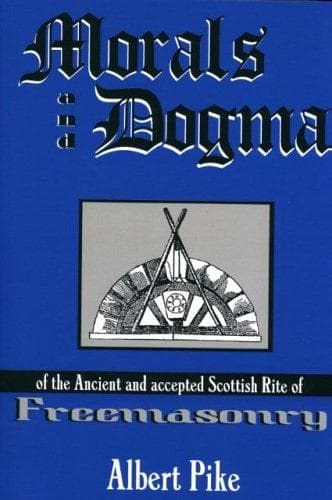
Morals and Dogma of the Ancient and Accepted Scottish Rite of FreemasonryPike, Albert
Religion
Morals and Dogma of the Ancient and Accepted Scottish Rite of Freemasonry
Pike, Albert
Freemasons
We would make or annul a particular contract; but the Thoughts of the
dead Judges of England, living when their ashes have been cold for
centuries, stand between us and that which we would do, and utterly
forbid it. We would settle our estate in a particular way; but the
prohibition of the English Parliament, its uttered Thought when the
first or second Edward reigned, comes echoing down the long avenues of
time, and tells us we shall not exercise the power of disposition as we
wish. We would gain a particular advantage of another; and the thought
of the old Roman lawyer who died before Justinian, or that of Rome's
great orator Cicero, annihilates the act, or makes the intention
ineffectual. This act, Moses forbids; that, Alfred. We would sell our
land; but certain marks on a perishable paper tell us that our father or
remote ancestor ordered otherwise; and the arm of the dead, emerging
from the grave, with peremptory gesture prohibits the alienation. About
to sin or err, the thought or wish of our dead mother, told us when we
were children, by words that died upon the air in the utterance, and
many a long year were forgotten, flashes on our memory, and holds us
back with a power that is resistless.
Thus we obey the dead; and thus shall the living, when we are dead, for
weal or woe, obey _us_. The Thoughts of the Past are the Laws of the
Present and the Future. That which we say and do if its effects last not
beyond our lives, is unimportant. That which shall live when we are
dead, as part of the great body of law enacted by the dead, is the only
act worth doing, the only Thought worth speaking. The desire to do
something that shall benefit the world, when neither praise nor obloquy
will reach us where we sleep soundly in the grave, is the noblest
ambition entertained by man.
It is the ambition of a true and genuine Mason. Knowing the slow
processes by which the Deity brings about great results, he does not
expect to reap as well as sow, in a single lifetime. It is the
inflexible fate and noblest destiny, with rare exceptions, of the great
and good, to work, and let others reap the harvest of their labors. He
who does good, only to be repaid in kind, or in thanks and gratitude, or
in reputation and the world's praise, is like him who loans his money,
that he may, after certain months, receive it back with interest. To be
repaid for eminent services with slander, obloquy, or ridicule, or at
best with stupid indifference or cold ingratitude, as it is common, so
it is no misfortune, except to those who lack the wit to see or sense to
appreciate the service, or the nobility of soul to thank and reward with
eulogy, the benefactor of his kind. His influences live, and the great
Future will obey; whether it recognize or disown the lawgiver.
Public-domain text, read in full here on John Shaqi.
Reviews
Reviews
No reviews yet
Be the first to share your thoughts on this work.
Elsewhere in the archive
Join the Discussion
Join the discussion
Sign in to leave a comment or review.
Sign InorCreate an account