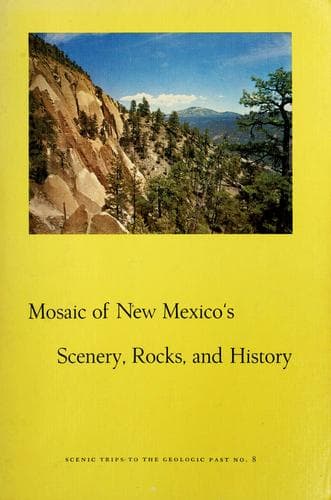
Mosaic of New Mexico's Scenery, Rocks, and History
History
Mosaic of New Mexico's Scenery, Rocks, and History
Geology -- New Mexico; New Mexico -- Description and travel; New Mexico -- History
The Indians in this part of the state fall into two distinct categories:
The builders, known as the Mimbres culture, constructed homes in caves
and along the watercourses of the Gila and Mimbres rivers. They reached
extremely high levels of culture, and then they disappeared. The Apache
Indians, who entered this country at the same time as they did the rest
of New Mexico, were responsible for the end of the farmers and builders,
at least in part. The Apaches were predators and the farmers were
peaceful, unversed in the arts of war. Finally the Apache ruled supreme,
and this region became the most important single stronghold of the
Indian. It was here that Geronimo found sanctuary. But the Apaches, too,
were forced to surrender their claims and were placed on reservations
outside this area.
Mining is and has been the main source of wealth. The great open-pit
operation of Kennecott Copper Company is at Santa Rita, east of Silver
City. This is one of the largest open-pit copper mines in North America.
To look into that huge man-made pit is a thrilling experience. This mine
was first opened in 1803 by the Spanish who needed copper badly as a
circulating currency in New Spain (Mexico). For a number of years, the
coins used for money in Mexico were from copper mined in southwestern
New Mexico.
Copper represents only a part of the mining activity in this region.
Famous mining districts in earlier days were at Kingston and Hillsboro,
just east of the Black Range on State Highway 90. These areas produced
considerable quantities of silver. There is some activity yet, but the
boom has long since passed them by, although they are interesting towns
to visit. The trip from U.S. 85 to Silver City via State Highway 90 is
one of the most scenic routes in the state.
In the region north of Silver City lies high mountain country, much of
it preserved as the Gila Wilderness Area. Here a person who wishes the
solitude of forest and mountain, the thrill of trout fishing in a clear
cold stream, and a wealth of wildlife can find his heart’s desire. In
the heart of this wilderness, the traveler might well find some of the
ancient homes of the Mimbres people. History and recreation blend into
one.
These complete the mosaic. Everywhere one travels in New Mexico is
enchanting history, in the land and/or in the people. This has not been
an effort to acquaint anyone with the intricate detail of all the
history of every nook and cranny of this land, but these broad strokes
made on the canvas may help the traveler, transient or native, to enjoy
himself. Let him accept the challenge, stop to investigate, search out
evidence of the history that is there in the colorful and changing land
itself, the Indian heritage, the Spanish past, the cattleman’s range,
the miner’s endless search—and become enchanted.
[Illustration: (_Forest Service, U.S.D.A., by John Whiteside_)
Wheeler Peak near Taos—highest point in New Mexico, 13,160 feet
above sea level]
Public-domain text, read in full here on John Shaqi.
Reviews
Reviews
No reviews yet
Be the first to share your thoughts on this work.
Elsewhere in the archive
Join the Discussion
Join the discussion
Sign in to leave a comment or review.
Sign InorCreate an account