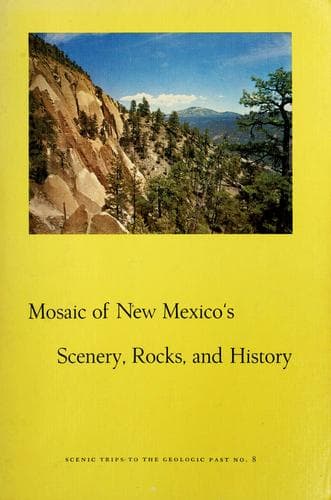
Mosaic of New Mexico's Scenery, Rocks, and History
History
Mosaic of New Mexico's Scenery, Rocks, and History
Geology -- New Mexico; New Mexico -- Description and travel; New Mexico -- History
Some of these animals are considered game animals; others may be pests,
since they prey upon or destroy what mankind regards as its own. The
coyote which takes a sheep from the small herder is wicked indeed in the
eyes of the sheepman. Predatoriness on all living things by other things
has gone on since time began and will continue—mankind being not the
least predator.
A good definition is that composed by the late Judge C. M. Botts who
defined a predator as “a critter that takes another critter that I
want.”
New Mexico’s immense topographic and geologic differences make for a
very wide range of habitats preferred by the various species. The elk
and deer, being highly adaptable, may be found from the Alpine tundra of
the higher mountains clear out into the creosote desert. Deer occur in
four separate subspecies: the Rocky Mountain and the desert mule deer,
the western whitetail, and the Sonoran fantail deer, which is also a
whitetail. These animals may be found all the way from the dense
coniferous forests of the north with perpetual gloom and cold to the
sun-scorched granite mountains such as the Florida and the Organ
mountains of southern New Mexico; from great towering granite spires to
the folded blocks of limestone such as comprise the Big Hatchets, the
Guadalupe, and the San Andres mountains.
The javelina, or little wild pig, lives along the watercourses in the
south west part of the state. Its thin spiky hair gives it little or no
protection against cold, and only in the balmier parts of New Mexico
does it feel at home.
The desert bighorn sheep, as distinguished from his cousin the Rocky
Mountain bighorn, goes around on a sun-scorched, ocotillo-covered
limestone-rubble slope in the full glare of the sun and lies down to
take his afternoon siesta. The Rocky Mountain bighorn, on the other
hand, with his preference for cooler climates does not shun even the
dense spruce timber at the very top of the Sandia Mountains as the
hideout for his afternoon rest.
This adaptability by New Mexico’s species to the tremendous differences
in altitude, rainfall, and temperature makes them all the more valuable
as a resource for the pleasure and enjoyment of everyone.
[Illustration: (_Photo courtesy of Forest Service_, U.S.D.A.)
Pack train on a wilderness trail]
The most popular big game animals in New Mexico are the mule deer in
either of the two subspecies. Every fall, beginning in late October and
extending ordinarily through December, more than 100,000 hunters take to
the woods for their 50-50 chance of bringing home the sought-after mule
deer. A hunter may shoot his mule deer at the Alpine tundra timber line,
out in the blazing heat of the creosote desert, or among the rock crags
of some of the southern desert mountains. He will find his quarry a
worthy opponent. Shy, wild, and with terrific eyesight and hearing,
these animals provide a true challenge.
Public-domain text, read in full here on John Shaqi.
Reviews
Reviews
No reviews yet
Be the first to share your thoughts on this work.
Join the Discussion
Join the discussion
Sign in to leave a comment or review.
Sign InorCreate an account