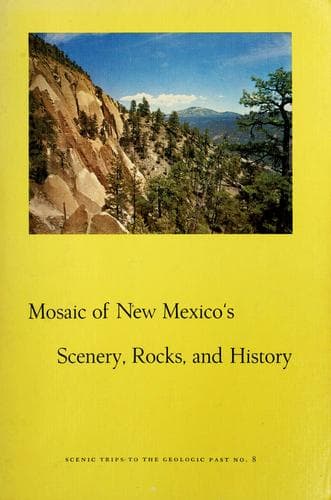
Mosaic of New Mexico's Scenery, Rocks, and History
History
Mosaic of New Mexico's Scenery, Rocks, and History
Geology -- New Mexico; New Mexico -- Description and travel; New Mexico -- History
A curator-custodian is on duty at the Coronado Museum headquarters,
which is open all year.
Pecos State Monument
Off U.S. Highway 84-85, three miles south of Pecos, is this State
Monument. It became a National Monument during late 1966.
This mission, the Church of Nuestra Senora de los Angeles de Porciuncula
at Pecos, dates from the year 1617. It is fitting that this mission,
which was one of the first two, with Jemez, established by the
Franciscans in New Mexico, should bear the name “Our Lady of the Angels
of Porciuncula,” for with his own hands, St. Francis, founder of the
Order, rebuilt the decaying chapel of Our Lady of Angels at Assisi,
which he called his Porciuncula or “Little Inheritance,” and there
established the headquarters of the Franciscan Order.
Pecos was well fortified because of its location on the eastern edge of
the pueblo area and its contact with the Plains Indians. It resisted the
raids for many years, but when a smallpox epidemic in 1838 reduced the
population to seventeen survivors, they moved to Jemez Pueblo,
abandoning Pecos.
A part of the massive adobe walls of the ruined mission has been
excavated and repaired, as have some of the rubble masonry walls.
Jemez State Monument
This Monument is at Jemez Springs, sixty miles north of Albuquerque on
State Highway 4.
One of the finest early mission churches was established at Giusewa
Pueblo. _Giusewa_ means “place of the boiling waters” in the language of
the Jemez Indians, and refers to the famous Jemez Hot Springs nearby.
The mission, with Pecos, was one of the two earliest in New Mexico.
These were founded one hundred and fifty-two years before the first
California missions.
The original settlement of the Giusewa Pueblo goes back hundreds of
years before Columbus’ discovery of America, as does the settlement of
the other pueblos, Quarai, Abo, and Pecos.
Guisewa Pueblo became extinct during the last quarter of the seventeenth
century, a result of the consolidation of several pueblos of the Jemez
province into fewer and larger towns. Only one town, the present Jemez
Pueblo, survives from that time. Excavation and repairs have been made
in the ruins of both the pueblo and the mission church.
La Mesilla State Monument
This colorful State Monument consists of the plaza in the village of
Mesilla, near Las Cruces, and the buildings nearby. The Monument
preserves an aspect of the Mexican Colonial culture and architecture
which flourished here in the early nineteenth century. The Gadsden
Purchase of 1853 was celebrated in the Mesilla Plaza and the famous
desperado, Billy the Kid, once stood trial here for his life. During the
Civil War, Mesilla was briefly the Confederate capitol of the Territory
of Arizona.
Lincoln State Monument
Public-domain text, read in full here on John Shaqi.
Reviews
Reviews
No reviews yet
Be the first to share your thoughts on this work.
Elsewhere in the archive
Join the Discussion
Join the discussion
Sign in to leave a comment or review.
Sign InorCreate an account