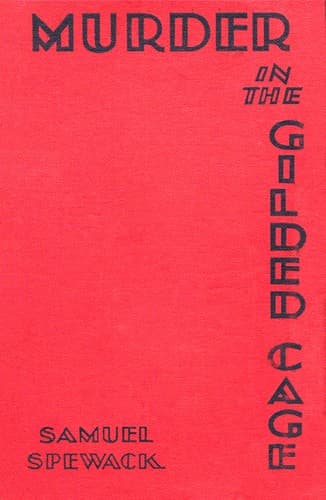
Americans -- Cuba -- Fiction; Detective and mystery stories; Havana (Cuba) -- Fiction; Murder -- Investigation -- Fiction
The Russian plied me with questions, some of them so minute and trivial
that I could not attach any importance to them. I must recite all
the events of the trial, all the testimony. I recounted some of the
adventures of the yacht, although I did not feel free to tell of the
escapade of the Breese boy.
Then he insisted that I come with him at once to his flat to meet his
friend, the Count Giering-Trelovitch. Although the hour was late I
could not refuse, for I felt strangely drawn to this unfortunate young
man whose story he had told me. I discovered that the two Russians
shared a tiny apartment on the Malecon. The Count himself had just
returned from a lonely promenade, he said. The morning newspaper was
under his arm.
“This gentleman,” the detective presented me, “has come down with Mrs.
Breese and her family on the yacht. He has seen your wife.”
The Count, who was prepared to be formally polite, now wrung my hand
with embarrassing cordiality.
“That is the best news I have heard in many years!” he exclaimed, his
rather melancholy blue eyes lighting up. “How is she? Is she well? Is
she happy? What did she say? How does she look?”
There was an engaging boyish impulsiveness about his manner now that
quite won me. I could see now what the detective meant when he said
that the Count’s wedding was a story-book romance. If the Princes that
walk the earth are paunchy, given to gout and short-temper, this young
man defied nature and upheld art at least pictorially. Blond, finely
featured, slender and graceful of carriage, he had been designed to
blend with the fragile loveliness of Mary Rose Breese.
“What did she wear? She dressed so exquisitely always.” For the life of
me, I could not tell him. He seemed disappointed, baffled. “But what
did she say? Didn’t she say anything?”
I explained that I had but little opportunity to talk with her. But I
said she seemed well and, as far as I could tell, happy.
He sighed, as if relieved. “I have been trying to see her. Boris
Sergeivitch has undoubtedly told you my story. I feel she needs me, but
what can I do? If you could get a message to her----”
But here I was called upon to explain that my relations with the Breese
family had been severed. He seemed downcast.
“If I felt,” he said, “that she really didn’t want to see me, I would
disappear and she would never hear a word from me. But it’s her mother
who’s back of this. I know! That woman!” He seemed to sink in a brown
study. “She should be punished.”
The detective had apparently been paying little attention to his
friend. He had picked up the morning paper--the morning edition of the
Havana Post, and was reading its spare columns with absorbed interest.
Suddenly he whistled, as if in surprise. I turned to him. The Count,
too, looked up.
“Read this,” the detective commanded, pointing with a stubby forefinger
to a paragraph noting the American visitors to the city.
Public-domain text, read in full here on John Shaqi.
Reviews
Reviews
No reviews yet
Be the first to share your thoughts on this work.
Join the Discussion
Join the discussion
Sign in to leave a comment or review.
Sign InorCreate an account