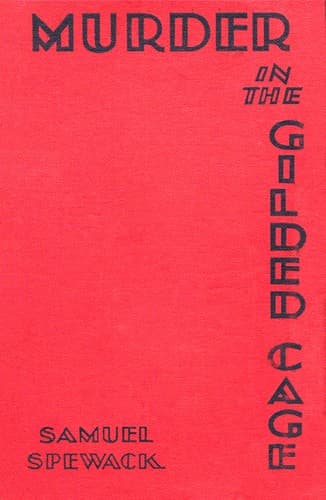
Americans -- Cuba -- Fiction; Detective and mystery stories; Havana (Cuba) -- Fiction; Murder -- Investigation -- Fiction
This was Mrs. Breese in her last moment of life. She could not have
chosen a more sensational exit. I could not believe that this vital,
domineering woman had been transformed into the still and gory heap
before me. Her eyes as they were that moment still haunt me. There was
such a ghastly look of surprise in those set eyes of hers. Possibly it
was a physical distortion born of her last moment of suffering.
Smith bent over the prone figure. “Right through the heart,” he said
finally. “Don’t need any of these native medical examiners to tell me
she died immediately.”
Then he addressed the policeman in Spanish and inquired: “Where are the
members of the family?”
“They are upstairs. Shall I call them?”
“No. Not yet. I want to take a look around first.”
He went to the two French windows and noted that both were locked
securely from the inside.
Consulting my notes once more, I find that the body was exactly four
feet from the left wall. I jotted down every item of furniture in this
room. There were the following major pieces: a hand-carved table in
the center, with four chairs; eight huge tapestried chairs against the
wall; a bulky secretary; a Spanish marble mantel; an ornate and new
radio in silver and black; a Jo Davidson bust of Mrs. Breese; two large
canvases, one a Romney, the other, I believe, an Italian primitive; and
several water colors and pastels of modernist persuasion. A veritable
jumble of art.
Although we searched carefully, we found no weapon. There were no signs
of violence in the room or upon the body. The furniture was not upset
and the clothes of the woman were unruffled. Only that horrible look
of surprise in her set eyes, which Smith, too, commented upon. It was
not so much terror that was written there, it seemed to me, as it was
sheer amazement at the tragedy that had overtaken her. I could readily
believe that death was far from the thoughts of this woman.
“If only,” I said, “there was something to that superstition that the
eyes of the victim photograph the murderer in the last moment of life!
We’d have the secret of this in twenty-four hours!”
Smith grunted impatiently, as if annoyed at such idle speculation.
He prowled about the room, methodically noting a host of what seemed
to me uninteresting detail. Finally he said: “There’s one thing I’ve
learned--there’s no such thing as waste motion in a case of this kind.
One must overlook nothing.”
“And what have you found?” I demanded.
“One thing--and that the man who did this job----”
“Assuming it is a man,” I intervened.
“Assuming it is a man,” he repeated. “But whoever did this job left us
a perfect piece of marksmanship. One bullet killed her, and as far as I
can tell, it went straight through the heart. The medical examiner can
check up on that.” (Dr. Miguel de Cassandra later confirmed this fact.)
“May it not have been a stroke of luck--this perfect marksmanship?” I
suggested.
Public-domain text, read in full here on John Shaqi.
Reviews
Reviews
No reviews yet
Be the first to share your thoughts on this work.
Join the Discussion
Join the discussion
Sign in to leave a comment or review.
Sign InorCreate an account