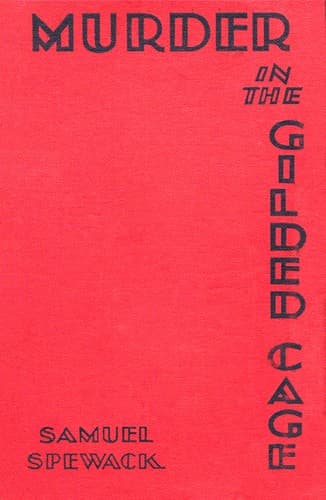
Americans -- Cuba -- Fiction; Detective and mystery stories; Havana (Cuba) -- Fiction; Murder -- Investigation -- Fiction
“Please understand,” the Count continued, “whatever I have to say I
shall say to Miss Breese. To no one else.”
“All right,” said Smith, gesturing to the butler. “Get Miss Breese down
here.” The butler hurried off. The Count looked about him. He stared at
the body.
“I don’t want Miss Breese to come into this room. It would not be
advisable,” he said. “And in any case, I wish to talk to her alone. I
want you two gentlemen to wait here, at this door. You will hold it
slightly open, so that you may listen to what I have to say. I don’t
want Miss Breese to know we’re being watched. I want her to feel that
we are quite alone, especially as it may be the last time.” He paused,
and smiled bitterly. Then he waved a white hand apologetically. “You
perhaps do not understand me. _C’est bien._ The only thing to remember
for you gentlemen is: you will stay, please, right here.”
“You’re much too insistent about that,” said Smith suspiciously. “Wait
a minute! You were caught hiding in this house. How do I know you
aren’t trying to get away--shoving us behind this door?”
“How can I get away?” demanded the Count quietly. “You will be right
here. You can have a revolver pointed at me, if you wish.” His
gentleness left him and he was sharp and incisive. He was now giving
commands. “Understand--you will either follow my suggestion or I shall
say nothing.”
Before Smith could reply, we heard footsteps, and the Count opened the
door. He strode out into the reception-room, carefully closing the door
behind him so that we were left barely a crack through which to peep.
Smith just as carefully widened the crack, and we caught a glimpse of
Mary Breese descending the stairs. She was deathly pale, and her eyes
were lost in mourning shadows.
There was not enough room for the two of us, so Smith monopolized the
sight. I strained to listen to the scene I could not see. But I noticed
that Smith was following the Russian’s suggestions to the letter. His
right hand was at his revolver holster.
I heard the Count cry: “Mary!”
A pause.
Then I heard her move toward him, crying incoherently: “Isn’t it awful!
I need you so!”
I heard him trying to comfort her gently. She was sobbing
unrestrainedly now.
“Please, Mary ... please ... you mustn’t.” The Count’s voice broke now.
I heard her say: “It would never have happened if I hadn’t let you
go--I needed you so! But what could I do?”
“No,” he said slowly, “it would never have happened.”
“You mustn’t leave me now!” she cried. “You mustn’t ever leave me!”
Silence. Then, as if the words were wrung from him: “Why didn’t
you--why didn’t you try to see me as I begged you? You got my letters,
didn’t you?”
“No, I didn’t get any letters. What letters? I didn’t even know you
were in town! I don’t know that you’re here now! I--oh, I don’t know
anything any more!”
“Please--don’t cry. Didn’t I tell you I phoned. I wrote. I tried every
way to see you.”
“No!” Then as if in agonized appeal: “Don’t leave me--please don’t
leave me!”
Public-domain text, read in full here on John Shaqi.
Reviews
Reviews
No reviews yet
Be the first to share your thoughts on this work.
Join the Discussion
Join the discussion
Sign in to leave a comment or review.
Sign InorCreate an account