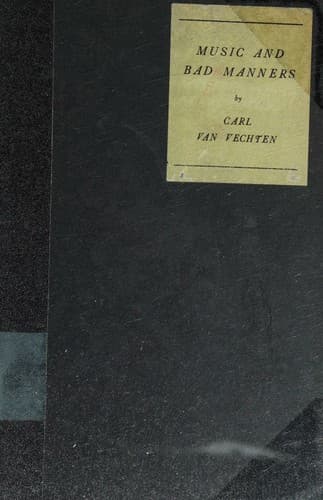
Composers; Music -- 20th century -- History and criticism
Enrique Granados y Campina was born July 27, 1867, at Lerida,
Catalonia. (He died March 24, 1916; a passenger on the _Sussex_,
torpedoed in the English Channel.) From 1884 to 1887 he studied
piano under Pujol and composition under Felipe Pedrell at the Madrid
Conservatory. That the latter was his master presupposed on his part
a valuable knowledge of the treasures of Spain’s past and that, I
think, we may safely allow him. There is, I am told, an interesting
combination of classicism and folk-lore in his work. At any rate,
Granados was a faithful disciple of Pedrell. In 1898 his zarzuela
_Maria del Carmen_ was produced in Madrid and has since been heard in
Valencia, Barcelona, and other Spanish cities. Five years later some
fragments of another opera, _Foletto_, were produced at Barcelona.
His third opera, _Liliana_, was produced at Barcelona in 1911. He
wrote numerous songs to texts by the poet, Apeles Mestres; Galician
songs, two symphonic poems, _La Nit del Mort_ and _Dante_ (performed
by the Chicago Symphony Orchestra for the first time in America at the
concerts of November 5 and 6, 1915); a piano trio, string quartet, and
various books of piano music (_Danzas Españolas_, _Valses Poéticos_,
_Bocetos_, _etc._).
_New York, March 20, 1916._
Shall We Realize Wagner’s Ideals?
Historians of operatic phenomena have observed that fashions in music
change; the popular Donizetti and Bellini of one century are suffered
to exist during the next only for the sake of the opportunity they
afford to some brilliant songstress. New tastes arise, new styles
in music. Dukas’s generally unrelished (and occasionally highly
appreciated) _Ariane et Barbe-Bleue_ may not be powerful enough
to establish a place for itself in the répertoire, but its direct
influence on composers and its indirect influence on auditors make this
lyric drama highly important as an indication of the future of opera as
a fine art. Moussorgsky’s _Boris Godunow_, first given in this country
some forty years after its production in Russia, is another matter.
That score contains a real thrill in itself, a thrill which, once felt,
makes it difficult to feel the intensity of a Wagner drama again:
because Wagner is becoming just a little bit old-fashioned. _Lohengrin_
and _Tannhäuser_ are becoming a trifle shop-worn. They do not glitter
with the glory of a _Don Giovanni_ or the invincible splendour of an
_Armide_. There are parts of _Die Walküre_ which are growing old. Now
Wagner, in many ways the greatest figure as opera composer which the
world has yet produced, could hold his place in the singing theatres
for many decades to come if some proper effort were made to do justice
to his dramas, the justice which in a large measure has been done to
his music. This effort at present is not being made.
Public-domain text, read in full here on John Shaqi.
Reviews
Reviews
No reviews yet
Be the first to share your thoughts on this work.
Join the Discussion
Join the discussion
Sign in to leave a comment or review.
Sign InorCreate an account