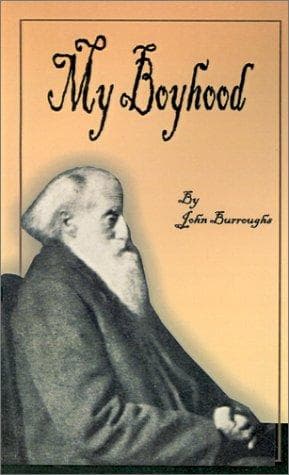
Burroughs, John, 1837-1921 -- Childhood and youth; Naturalists -- New York (State) -- Biography
It was my duty as a farm boy to help pick up the stone and pry up the
rocks. I could put the bait under the lever, even if my weight on top of
it did not count for much. The slow, patient, hulky oxen, how they would
kink their tails, hump their backs, and throw their weight into the bows
when they felt a heavy rock behind them and Father lifted up his voice
and laid on the "gad"! It was a good subject for a picture which, I
think, no artist has ever painted. How many rocks we turned out of their
beds, where they had slept since the great ice sheet tucked them up
there, maybe a hundred thousand years ago--how wounded and torn the
meadow or pasture looked, bleeding as it were, in a score of places,
when the job was finished! But the further surgery of the plough and
harrow, followed by the healing touch of the seasons, soon made all
whole again.
The work on the farm in those days varied little from year to year.
In winter the care of the cattle, the cutting of the wood, and the
thrashing of the oats and rye filled the time. From the age of ten or
twelve till we were grown up, we went to school only in winter, doing
the chores morning and evening, and engaging in general work every other
Saturday, which was a holiday. Often my older brothers would have to
leave school by three o'clock to get home to put up the cows in my
father's absence. Those school days, how they come back to me!--the long
walk across lots, through the snow-choked fields and woods, our narrow
path so often obliterated by a fresh fall of snow; the cutting winds,
the bitter cold, the snow squeaking beneath our frozen cowhide boots,
our trousers' legs often tied down with tow strings to keep the snow
from pushing them up above our boot tops; the wide-open white landscape
with its faint black lines of stone wall when we had passed the woods
and began to dip down into West Settlement valley; the Smith boys and
Bouton boys and Dart boys, afar off, threading the fields on their way
to school, their forms etched on the white hillsides, one of the bigger
boys, Ria Bouton, who had many chores to do, morning after morning
running the whole distance so as not to be late; the red school house
in the distance by the roadside with the dark spot in its centre made
by the open door of the entry way; the creek in the valley, often choked
with anchor ice, which our path crossed and into which I one morning
slumped, reaching the school house with my clothes freezing upon me
and the water gurgling in my boots; the boys and girls there, Jay Gould
among them, two thirds of them now dead and the living scattered from
the Hudson to the Pacific; the teachers now all dead; the studies, the
games, the wrestlings, the baseball--all these things and more pass
before me as I recall those long-gone days. Two years ago I hunted up
one of those schoolmates in California whom I had not seen for over
sixty years. She was my senior by seven or eight years, and I had a
Public-domain text, read in full here on John Shaqi.
Reviews
Reviews
No reviews yet
Be the first to share your thoughts on this work.
Join the Discussion
Join the discussion
Sign in to leave a comment or review.
Sign InorCreate an account