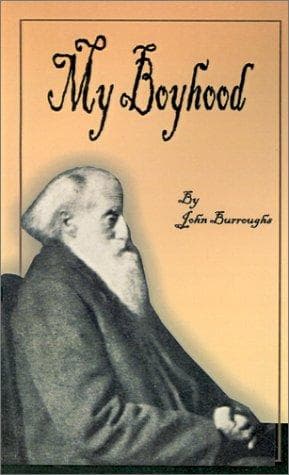
Burroughs, John, 1837-1921 -- Childhood and youth; Naturalists -- New York (State) -- Biography
The buttercups and the daisies would be blooming when we were working
the road, and the timothy grass about ready to do so--pointing to the
near approach of the great event of the season, the one major task
toward which so many other things pointed--"haying;" the gathering of
our hundred or more tons of meadow hay. This was always a hard-fought
campaign. Our weapons were gotten ready in due time, new scythes and
new snaths, new rakes and new forks, the hay riggings repaired or built
anew, etc. Shortly after the Fourth of July the first assault upon the
legions of timothy would be made in the lodged grass below the barn. Our
scythes would turn up great swaths that nearly covered the ground and
that put our strength to a severe test. When noon came we would go to
the house with shaking knees.
The first day of haying meant nearly a whole day with the scythe, and
was the most trying of all. After that a half day mowing, when the
weather was good, meant work in curing and hauling each afternoon. From
the first day in early July till the end of August we lived for the
hayfield. No respite except on rainy days and Sundays, and no change
except from one meadow to another. No eight-hour days then, rather
twelve and fourteen, including the milking. No horse rakes, no mowing
machines or hay tedders or loading or pitching devices then. The scythe,
the hand rake, the pitchfork in the calloused hands of men and boys did
the work, occasionally the women even taking a turn with the rake or in
mowing away. I remember the first wire-toothed horse rake with its two
handles, which when the day was hot and the grass heavy nearly killed
both man and horse. The holder would throw his weight upon it to make
it grip and hold the hay, and then, in a spasm of energy, lift it up and
make it drop the hay. From this rude instrument, through various types
of wooden and revolving rakes, the modern wheeled rake, with which the
raker rides at his ease, has been evolved. At this season the cows were
brought to the yard by or before five, breakfast was at six, lunch in
the field at ten, dinner at twelve, and supper at five, with milking and
hay drawing and heaping up till sundown. Those mid-forenoon lunches of
Mother's good rye bread and butter, with crullers or gingerbread, and in
August a fresh green cucumber and a sweating jug of water fresh from the
spring--sweating, not as we did, because it was hot, but because it was
cold, partaken under an ash or a maple tree--how sweet and fragrant the
memory of it all is to me!
Public-domain text, read in full here on John Shaqi.
Reviews
Reviews
No reviews yet
Be the first to share your thoughts on this work.
Join the Discussion
Join the discussion
Sign in to leave a comment or review.
Sign InorCreate an account