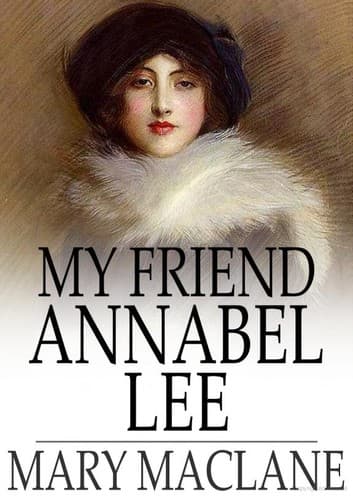
MacLane, Mary, 1881-1929; Women authors, American -- Biography
When a boy is left alone in the world by the death of his aunt and
starts out to find his uncle in Cincinnati--if you know Trowbridge’s
books--you prepare for hardship and weariness, but still occasional
sandwiches and doughnuts (but not the greasy kind). And always you
know there must be a haven in the house of the uncle in Cincinnati.
Only--if you know the Trowbridge books--you are fearful when you
get to the uncle’s door, and you would a little rather the boy
went in to meet him while you waited outside. Trowbridge’s uncles
are apt to be so sour as to heart, and so bitter as to tongue, and
so sarcastic in their remarks relating to boys who come in from
the country to the city in order that they--the uncles--may have
the privilege of supporting them. Though you know--if you know
the Trowbridge books--that Trowbridge’s boys never come into the
city for that purpose. The heavy-tempered uncles, too, are made
aware of this before long, and change the tenor of their remarks
accordingly--and after some just pride on the part of the nephews,
all goes well. Whereupon your feeling of satisfaction is more than
that of the boy, of the uncle, of Trowbridge himself.
But these roasted ears of corn and cold-boiled eggs are among
the lesser delights of the young-books of Trowbridge. The most
fascinating things in them are the conversations. They are so real
that you hear the voices and see the expressions of the faces.
Trowbridge is one of the kind that listens twice and thrice to
persons talking, so that he hears the key-note and the detail, and
his pen is of the kind that can write what he hears. It is never
too much, never too little; it is not noticeable at all, because
it is all harmony.
It is entirely and utterly common.
And it is real.
In the young-books of Trowbridge, and nowhere else, I have heard
boys talking together so that I knew how their faces looked, and how
carelessly and loosely their various collars were worn, and their
dubious hats. I have heard a grasping, grouty old man pound on the
kitchen floor with his horn-headed cane--he had come over while the
family were at breakfast to inform them that their dog had killed
five of his sheep, and to demand the dog’s life. I have heard the
lessons and other things they said in a country school-room sixty
years ago, where boys were sometimes obliged, for punishment, to sit
on nothing against the door. I have heard the extreme discontent
in the voice of another grouty, grasping farmer when it became
evident to him that he would be obliged to give up a horse that had
been stolen before he bought him. But here I must quote, as nearly
correctly as I can without the book:
“‘And sold him to this Mr. Badger’ (said Kit) ‘for seventy dollars.’
“‘Seventy gim-cracks!’ exclaimed Uncle Gray, aghast. ‘I should
think any fool might know he’s worth more than that.’
“He was thinking of Brunlow, but Eli applied the remark to himself.
Public-domain text, read in full here on John Shaqi.
Reviews
Reviews
No reviews yet
Be the first to share your thoughts on this work.
Join the Discussion
Join the discussion
Sign in to leave a comment or review.
Sign InorCreate an account