England -- Social life and customs -- 19th century -- Fiction
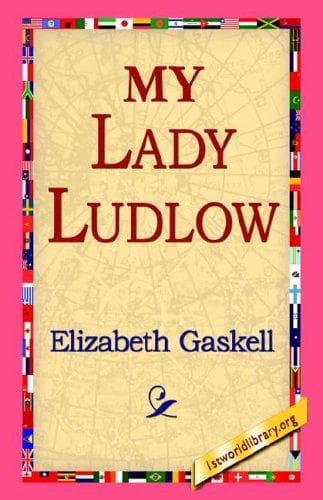
MY LADY LUDLOW
by Elizabeth Gaskell
CHAPTER I.
I am an old woman now, and things are very different to what they were
in my youth. Then we, who travelled, travelled in coaches, carrying six
inside, and making a two days’ journey out of what people now go over
in a couple of hours with a whizz and a flash, and a screaming whistle,
enough to deafen one. Then letters came in but three times a week:
indeed, in some places in Scotland where I have stayed when I was a
girl, the post came in but once a month;—but letters were letters then;
and we made great prizes of them, and read them and studied them like
books. Now the post comes rattling in twice a day, bringing short jerky
notes, some without beginning or end, but just a little sharp sentence,
which well-bred folks would think too abrupt to be spoken. Well, well!
they may all be improvements,—I dare say they are; but you will never
meet with a Lady Ludlow in these days.
I will try and tell you about her. It is no story: it has, as I said,
neither beginning, middle, nor end.
My father was a poor clergyman with a large family. My mother was always
said to have good blood in her veins; and when she wanted to maintain her
position with the people she was thrown among,—principally rich
democratic manufacturers, all for liberty and the French Revolution,—she
would put on a pair of ruffles, trimmed with real old English point, very
much darned to be sure,—but which could not be bought new for love or
money, as the art of making it was lost years before. These ruffles
showed, as she said, that her ancestors had been Somebodies, when the
grandfathers of the rich folk, who now looked down upon her, had been
Nobodies,—if, indeed, they had any grandfathers at all. I don’t know
whether any one out of our own family ever noticed these ruffles,—but we
were all taught as children to feel rather proud when my mother put them
on, and to hold up our heads as became the descendants of the lady who
had first possessed the lace. Not but what my dear father often told us
that pride was a great sin; we were never allowed to be proud of anything
but my mother’s ruffles: and she was so innocently happy when she put
them on,—often, poor dear creature, to a very worn and threadbare
gown,—that I still think, even after all my experience of life, they
were a blessing to the family. You will think that I am wandering away
from my Lady Ludlow. Not at all. The Lady who had owned the lace,
Ursula Hanbury, was a common ancestress of both my mother and my Lady
Ludlow. And so it fell out, that when my poor father died, and my mother
was sorely pressed to know what to do with her nine children, and looked
far and wide for signs of willingness to help, Lady Ludlow sent her a
letter, proffering aid and assistance. I see that letter now: a large
sheet of thick yellow paper, with a straight broad margin left on the
left-hand side of the delicate Italian writing,—writing which contained
Public-domain text, read in full here on John Shaqi.
Reviews
Reviews
No reviews yet
Be the first to share your thoughts on this work.
Join the Discussion
Join the discussion
Sign in to leave a comment or review.
Sign InorCreate an account