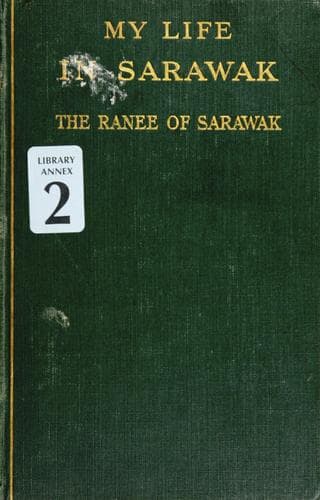
Brooke, Margaret, Lady, 1849-1936; Queens -- Malaysia -- Sarawak -- Biography; Sarawak (Malaysia) -- Description and travel
been associated intimately with the administration of Eastern peoples
and their lands, is that throughout the long years from 1841 to the
present time, the two white Rajahs of Sarawak spent practically their
whole lives in this remote corner of Asia, devoting their best energies
to the prosperity and the happiness of their subjects, whilst taking
from the country, of which they were the absolute Rulers, only the
most modest income. That has been the admirable and unusual “stamp”
of Brooke rule: to live with the people, to make their happiness the
first consideration, and to refuse wealth at their expense. Nothing
would have been easier--certainly for the present Rajah--than to live
at ease in some pleasant Western land, with perhaps an occasional
visit to Sarawak, and to devote to his own use revenues which he has
spent for the benefit of Sarawak and its people. The State is rich
in resources, mineral and agricultural; to many it would have seemed
most natural to fill the place with Chinese or to grant concessions to
Europeans. Either of these courses would have meant a large accession
of revenue, and no one would have thought it strange had the Ruler
of the country spent whatever proportion seemed good to him on
himself. Only the people of the country would have suffered; but they,
probably, would have considered that it was perfectly natural, and,
had they thought otherwise, it would have made no difference, for it
is not their habit to complain publicly of the doings of their Rulers.
The Rajahs of Sarawak have made “the benefit of the people of the
country” the business of their lives; all honour to them for their high
purpose. That the tradition they have established by seventy-two years
of devotion, of personal care of the affairs of Sarawak, should be
continued and perpetuated must be the prayer of all who love Malays.
I make a final quotation from Mr. Ireland’s book. It is this: “Nothing
could better serve to exhibit at once the strength and the weakness of
a despotic form of government than the present condition of Sarawak,
for if it be true that the wisdom, tolerance, and sympathy of the
present Rajah have moulded the country to the extraordinary state of
tranquil prosperity which it now enjoys, the power of an unwise or
wicked ruler to throw the country back into a condition of barbarism
must be admitted as a necessary corollary. The advent of such a ruler
is, however, in the highest degree improbable.”
Public-domain text, read in full here on John Shaqi.
Reviews
Reviews
No reviews yet
Be the first to share your thoughts on this work.
Join the Discussion
Join the discussion
Sign in to leave a comment or review.
Sign InorCreate an account