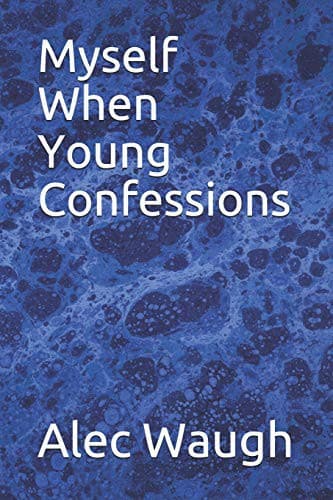
Authors, English -- 20th century -- Biography; Waugh, Alec, 1898-1981
And I remember that evening riding on a bus down Oxford Street and
reading the red placards of the newspapers that had been printed while
Knight and Shepherd were in. I remember the shriek of the paper boys:
“Surrey making sure. Paper! Surrey making sure!” And because it was the
climax of an unforgettable day I remember afterwards dining with my
mother at the Spanish Restaurant and taking her to “The Old Nest” at the
Alhambra.
But that, you will say, is an exceptional occasion. There have only been
three such matches since you went first to Lord’s, in a sailor suit, in
the May of 1904, and cried when Plum Warner’s wicket fell. But in a
lesser way of lesser things; I remember the books I have read, the
friends I have met, the parties I have been to, by the matches that were
then in progress. Should I, for example, be able to fix the date of the
inaugural banquet at the Connaught Rooms of that ill-fated League of
Youth, had I not read on the way there in the evening paper the score of
the tie-match between Somerset and Sussex; and were I to hear two people
wondering in what year and in what month Compton Mackenzie’s _Rich
Relatives_ was published, there would be to guide me the picture of a
sun-drenched day at Lord’s with Greville Stevens asking me what I
thought of the bright red volume that lay unopened on the seat before
me. I have never kept a diary. I shall have no need to as long as
_Wisden’s Almanack_ is published--during the summer, at any rate. There
is always some association. You have met a person for the first time.
You walk down Bedford Street towards the Strand. A newsboy rushes past
you with the first issue of the late night special. You read in the
stop-press column that Fender has taken eight wickets at Trent Bridge.
The date and hour of that first meeting is in your memory for ever. And
when you come to write your reminiscences, you have only to turn for
verification to the _Wisden_ for 1921.
But I begin to detect in the reader an ominous stir of irritation. “Has
this man,” he is beginning to ask himself, “no sense of proportion? Does
he think that a book or a picture or a romantic episode is of less
importance than a game of cricket? Does he seriously discuss in the same
breath an innings by Knight and a novel by Mackenzie? Cricket and
football! what do they matter, anyway?”
Little enough, no doubt; but then in the face of eternity does anything
matter so very greatly? What are we and our works, our triumphs, our
ambitions, our disasters, but accidents in the long process of effect
and cause. We talk of the eternal verities, but the flowering of art is
as temporal as the enjoyment we draw from it. In sixty years we shall be
no longer here to admire El Greco’s painting. And in six hundred years
its colours will have faded, the canvas will have lost its beauty. It
will be valueless. And in the presence of eternity what is six years, or
sixty, or six hundred?
Public-domain text, read in full here on John Shaqi.
Reviews
Reviews
No reviews yet
Be the first to share your thoughts on this work.
Join the Discussion
Join the discussion
Sign in to leave a comment or review.
Sign InorCreate an account