On the dark bottom of the great salt lake
Imprisoned lay the giant snake,
With naught his sullen sleep to break.
_Poets of the North_, "Oelenschlæger." Translated by Longfellow.
That frank writer, Montaigne, says[252]:--
"Yet on the other side it is a sottish presumption to disdaine and
condemne that for false, which unto us seemeth to beare no show of
likelihood or truth: which is an ordinarie fault in those who perswade
themselves to be of more sufficiencie than the vulgar sort.
"But reason hath taught me, that so resolutely to condemne a thing for
false, and impossible, is to assume unto himself the advantage, to have
the bounds and limits of God's will, and of the power of our common mother
Nature tied to his sleeve: and that there is no greater folly in the
world, than to reduce them to the measure of our capacitie, and bounds of
our sufficiencie.
"If we term those things monsters or miracles to which our reason cannot
attain, how many such doe daily present themselves unto our sight? let us
consider through what cloudes, and how blinde-folde we are led to the
knowledge of most things, that passe our hands: verily we shall finde, it
is rather custome, than Science that removeth the strangenesse of them
from us: and that those things, were they newly presented unto us, wee
should doubtless deeme them, as much, or more unlikely, and incredible,
than any other."
Montaigne's remarks seem to me to apply as aptly to the much-vexed
question of the existence or non-existence of the sea-serpent as though
they had been specially written in reference to it.
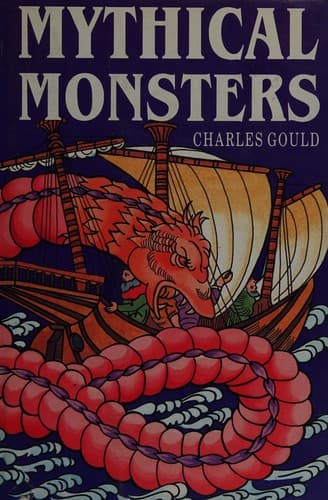
The sea-serpent, at once the belief and the denied of scientific men; the
accepted and ignored, according to their estimation of the evidence, of
reasoners, not scientific perhaps, but intelligent and educated; the
valued basis for items to the journalist, and the quintain for every
self-sufficient gobemouche to tilt against; appearing mysteriously at long
intervals and in distant places; the sea-serpent has as yet avoided
capture and the honourable distinction of being catalogued and labelled in
our museums.
Public-domain text, read in full here on John Shaqi.
Reviews
Reviews
No reviews yet
Be the first to share your thoughts on this work.
Elsewhere in the archive
Join the Discussion
Join the discussion
Sign in to leave a comment or review.
Sign InorCreate an account