Yet I do believe this weird creature to be a real solid fact, and not a
fanciful hallucination. This assertion, however, has to be sustained under
many difficulties. The dread of ridicule closes the mouths of many men who
could speak upon the subject, while their dependent position forces them
to submit to the half-bantering, half-warning expostulations of their
employers. When, for example, an unimaginative shipowner breaks jests over
his unfortunate shipmaster's head, and significantly hints his hope (as I
know to have been the case) that on his next voyage he will see no more
sea-serpents, or, in other words, that the great monster belongs to the
same genus as the snakes seen in the boots of a western dram-drinker, we
may be sure that an important barrier is put to any further communication
on the subject from that source, at least;[253] or when, again, some knot
of idle youngsters enliven the monotony of a long voyage by preparing a
deliberate hoax for publication on their arrival, a certain amount of
discredit necessarily attaches to the monster on the ultimate exposure of
the jest.
Men also occasionally deceive themselves, and while honestly believing
that they have seen his oceanic majesty, produce a story which, on
analysis, crumbles into atoms and crowns him with disgrace as an impostor.
The hard logic of science, in the hand of one of our master minds, has
also been arrayed against him, but fortunately weighs rather against
special avatars than against his existence absolutely.
Finally, the narratives of different observers disagree so much in detail
that we have a difficulty in reconciling them, except upon the supposition
that they relate to several distinct creatures, a supposition which I
shall hope to show is not improbable, as well as that the term sea-serpent
is an unwarranted specific differentiation of that of sea-monster, the
various creatures collectively so designated being neither serpents nor,
indeed, always mutually related. In commencing my record, I must bear in
mind Mrs. Glasse's proverbially excellent advice, and admit that it is
simply a history of the various appearances of a creature or creatures too
fugitive to admit of specific examination, and that until, by some
remarkable stroke of fortune, specimens are secured, their zoological
status must remain an unsolved, although closely guessed at, problem.
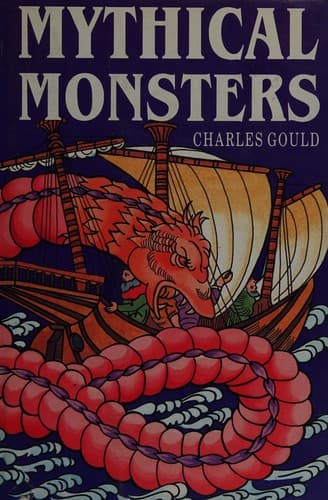
I have elsewhere stated my conviction that the serpent Midgard is only a
corruption of accounts of the sea-serpent handed down from times when a
supernatural existence was attributed to it; and we have in the Sagas
probably the earliest references to it, unless, perhaps, the serpents
mentioned by Aristotle, which attacked and overset the galleys off the
Libyan coast, may have been of this species.
Public-domain text, read in full here on John Shaqi.
Reviews
Reviews
No reviews yet
Be the first to share your thoughts on this work.
Elsewhere in the archive
Join the Discussion
Join the discussion
Sign in to leave a comment or review.
Sign InorCreate an account