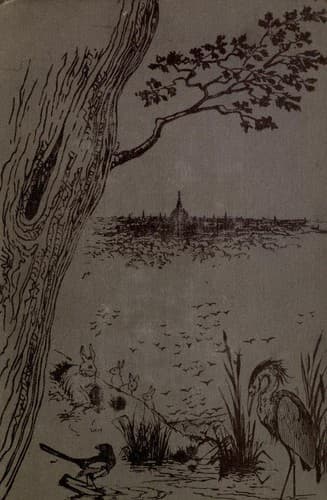
Country life -- England; Natural history -- Outdoor books; Nature study
It was clearly the atmosphere--not the fog--but simply the atmosphere of
London brought out over the fields by a change in the wind, and
prevented from diffusing itself by conditions of which nothing seems
known. For at ordinary times the atmosphere of London diffuses itself in
aerial space and is lost, but on this hot July day it came bodily and
undiluted out into the cornfields. From its appearance I should say it
would travel many miles in the same condition. In November fog seems
seasonable: in hot and dry July this phenomenon was striking.
Along the road flocks of sheep continue to travel, some weary enough,
and these, gravitating to the rear of the flock by reason of infirmity,
lie down in the dust to rest, while their companions feed on the wayside
sward. But the shepherds are careful of them, and do not hasten.
Shepherds here often carry the pastoral crook. In districts far from the
metropolis you may wander about for days, and with sheep all round you,
never see a shepherd with a crook; but near town the pastoral staff is
common.
These flocks appear to be on their way to the southern down farms, and,
as I said before, the shepherds are tender over their sheep and careful
not to press them. I regret that I cannot say the same about the
bullocks, droves of which continually go by, often black cattle, and
occasionally even the little Highland animals. The appearance of some of
these droves is quite sufficient to indicate the treatment they have
undergone. Staring eyes, heads continually turned from side to side,
starting at everything, sometimes bare places on the shoulders, all tell
the same tale of blows and brutal treatment.
Suburban streets which a minute before were crowded with ladies and
children (most gentlemen are in town at midday) are suddenly vacated
when the word passes that cattle are coming. People rush everywhere,
into gardens, shops, back lanes, anywhere, as if the ringing scabbards
of charging cavalry were heard, or the peculiar thumping rattle of
rifles as they come to the "present" before a storm of bullets. It is no
wonder that townsfolk exhibit a fear of cattle which makes their friends
laugh when they visit the country after such experiences as these. This
should be put down with a firm hand.
By the roadside here the hay tyers, who cut up the hayricks into
trusses, use balances--a trifling matter, but sufficient to mark a
difference, for in the west such men use a steelyard slung on a prong,
the handle of the prong on the shoulder and the points stuck in the
rick, with which to weigh the trusses. Wooden cottages, wooden barns,
wooden mills are also characteristic.
Mouchers come along the road at all times and seasons, gathering
sacksful of dandelions in spring, digging up fern roots and cowslip mars
for sale, cutting briars for standard roses, gathering water-cresses and
mushrooms, and in the winter cutting rushes.
Public-domain text, read in full here on John Shaqi.
Reviews
Reviews
No reviews yet
Be the first to share your thoughts on this work.
Join the Discussion
Join the discussion
Sign in to leave a comment or review.
Sign InorCreate an account