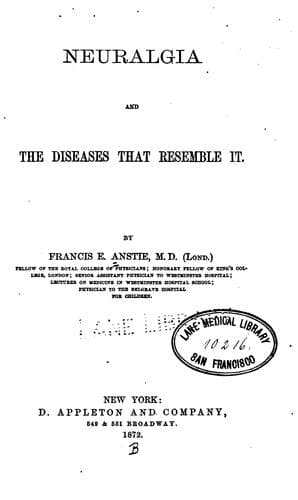
Neuralgia and the diseases that resemble itAnstie, Francis Edmund
Science
Neuralgia and the diseases that resemble it
Anstie, Francis Edmund
Neuralgia
This seems the proper place for such remarks as must be made upon the
function of alcohol in neuralgia; for, though this agent is a true
narcotic when given in large doses, it is not under that aspect that I
can recommend its use in neuralgia at all. I have written so much on
this subject lately, that I shall here content myself with an emphatic
repetition of my protest against the use of alcoholic liquors as direct
remedies for pain. They ought only to be given, in neuralgia, in such
moderate doses, with the meals, as may assist primary digestion without
inducing any torpor, or flushing of the face, or artificial
exhilaration. I cannot too expressly reprobate the practice of
encouraging neuralgics, especially women, to relieve pain and depression
by the direct agency of wine or spirit; it is a system fraught with
dangers of the gravest kind.
(_b_) The anti-toxic remedies include agents addressed to the
modification of a special condition of the blood and tissues induced by
the presence of morbid poisons, of which syphilis, malaria, and (more
doubtfully) gout and rheumatism, are the representative examples.
Of syphilitic neuralgia the treatment may be summed up in a few words:
Give iodide of potassium in doses rapidly increased up to a daily
quantum of twenty to thirty grains. If this fails, give one-twelfth of a
grain of bichloride of mercury thrice daily.
Of malarial neuralgia I can only speak from such a limited experience
that I am by no means in a position to give an exhaustive account of the
treatment. Quinine is, of course, the remedy that should first be tried;
and, as the paroxysms are usually regular in their recurrence, I prefer
to give the drug after the plan which is, I think, incontestably the
best in ordinary ague--_i. e._, to administer one large dose (five to
twenty grains) about an hour before the time when the attack is
expected. With a few exceptions the malady, unless it had taken very
deep root before we were consulted, will yield to a few doses given in
this way; after the morbid sequence has been thus interrupted, it will
be proper to continue the action of quinine in smaller and more frequent
doses, given for three or four weeks continuously. For the comparatively
rare cases in which quinine fails, the prolonged use of arsenic
(Fowler's solution, five to eight minims three times a day), especially
with the simultaneous employment of cod-liver oil, is to be recommended.
Public-domain text, read in full here on John Shaqi.
Reviews
Reviews
No reviews yet
Be the first to share your thoughts on this work.
Elsewhere in the archive
Join the Discussion
Join the discussion
Sign in to leave a comment or review.
Sign InorCreate an account