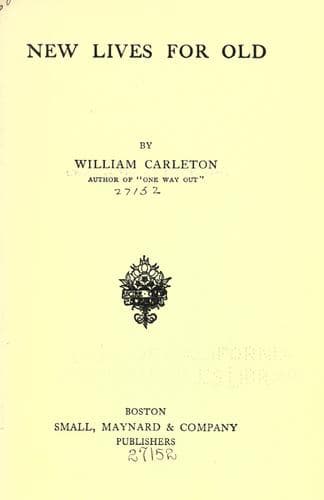
Agriculture, Cooperative -- Fiction; Country life -- Fiction; Farmers -- Fiction; New England -- Fiction; Villages -- Fiction
I meant every word I said and I set to work right off. One of the
first things I did was to have the Reverend Percy Cunningham up to
supper. His church was probably the biggest social influence in the
village and so if it was possible I wanted to enlist him at the
beginning. Personally I didn’t think much of his ability. He was a
serious man who acted as though he thought his chief function here
was the conducting of funerals. The very sight of him was a grim
reminder of death. He dressed in black, seldom smiled, and he walked
on tiptoe. His appearance was all the more marked because it happened
that Seavey, the local undertaker, was a roly-poly, good-natured man
and the biggest sport in town. He owned an automobile, drank more than
was good for him, and acted as starter at all the horse races within a
radius of fifty miles. Perhaps it was to offset this blithe influence
of his colleague that Cunningham felt it necessary to go to the other
extreme. At any rate Ruth said that whenever he called in the afternoon
she felt as though she ought to darken the room and send the children
off to a neighbor.
We had him up and Ruth laid herself out to make the meal as cheerful as
possible, but when we were through I felt like saying Amen. Ruth spoke
of it later as the Last Supper and was ashamed of herself afterwards.
I took him into the front room and began on him at once.
“Mr. Cunningham,” I said, “it seems to me the time has come for this
town to take out a new lease on life.”
“To be sure,” he agreed.
“Well,” I said, “you’ve been here longer than I have; what’s your
suggestion for bringing this about?”
He thought a moment and then he said, “I’ve been seriously considering
your suggestion for a very long while--in fact ever since I took up my
pastoral work here.”
“That was about fifteen years ago?” I inquired.
“Sixteen years this coming spring,” he answered.
“You ought to have reached some conclusion in that time,” I said.
“To be sure,” he nodded. “What I thought I should do when I saw my
opportunity was to invite here two or three good evangelists and hold a
rousing week of revival services.”
Now I have no objection to revival services. In their way they do
good. But after all, their function is largely religious and I had in
mind just at present something more material. Besides, the revival end
seemed to me to be his own duty. He himself ought to have been holding
meetings all these last sixteen years.
“That’s all right,” I said. “I guess we need something of the sort. But
to get down to brass tacks, have you any idea how many people in this
town are in debt?”
“No,” he said, “I have never looked into that.”
“About half of them,” I said. “Have you any idea how many of the men
and women in this town are drunkards?”
“Women--drunkards?” he exclaimed.
“About a third of them,” I said.
“Mr. Carleton, you must be mistaken!”
Public-domain text, read in full here on John Shaqi.
Reviews
Reviews
No reviews yet
Be the first to share your thoughts on this work.
Join the Discussion
Join the discussion
Sign in to leave a comment or review.
Sign InorCreate an account