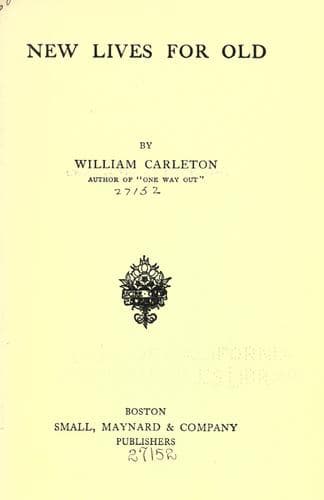
Agriculture, Cooperative -- Fiction; Country life -- Fiction; Farmers -- Fiction; New England -- Fiction; Villages -- Fiction
Holt read up on the subject and he found that coöperative farming which
was so novel to us in the East had long been in successful operation
in the West and South. That’s just the point. So are a hundred other
good things. We in the East have urged our young farmers West until
we have drained the East of its best. We have sent them forth like
missionaries in such numbers that now we need some of them back as
missionaries to ourselves. It’s those same men in the West who have
been first to seize upon the new ideas in agriculture, while their
eastern brothers have gone along in the same old ruts. New England as a
whole has been treated like one vast deserted farm not worth anyone’s
trouble. The Government itself treats it as such. It’s eager enough to
spend millions on draining projects in Florida or irrigation projects
in the West while there are whole townships in the State of Maine in as
primeval a condition as they were at the landing of the Pilgrims. It’s
actually so. If Maine were located in Oregon it would be to-day the
richest State in the Union. But as sure as fate the old-world pioneers
will soon rediscover it if we don’t ourselves, for to them Maine is the
Far West.
I find I get switched back to that theme every time I trace a new
feature of our development.
As I said, Holt read up on the subject of coöperative farming as
he always read up on every new subject before tackling it. About
the first thing he ran into was the history of the Eastern Shore of
Virginia Produce Exchange--an enterprise which reads like romance.
Every farmer in New England ought to read it. Holt gave a talk on
it before the club and everyone listened in amazement. Here was a
good farming country settled by industrious well-meaning farmers who
raised good stuff, but who in 1899 found themselves on the verge of
bankruptcy. It was each man for himself and sometimes they sold their
crops for half what it cost to raise them. As individuals they couldn’t
reach their market without giving up their profits to commission men
and railroads. Then someone organized the exchange and so poor were
its members that a membership fee of only five dollars was charged
with the privilege of paying only twenty-five cents down and the rest
in installments. During the first year the organization shipped four
hundred thousand barrels of produce; ten years later it was shipping
one million four hundred thousand barrels. It now handles every year
one million barrels of Irish potatoes and eight hundred thousand
barrels of sweet potatoes. During the last three years it has done an
average business of two million five hundred thousand dollars a year.
It has lifted a stagnant community into a prosperous community within a
decade.
Public-domain text, read in full here on John Shaqi.
Reviews
Reviews
No reviews yet
Be the first to share your thoughts on this work.
Elsewhere in the archive
Join the Discussion
Join the discussion
Sign in to leave a comment or review.
Sign InorCreate an account