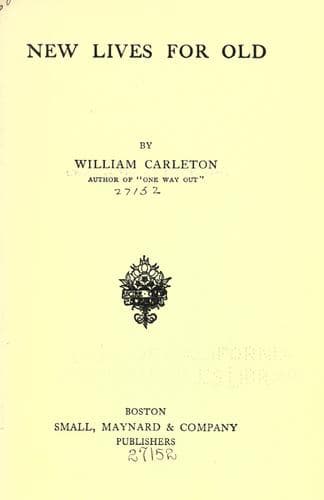
Agriculture, Cooperative -- Fiction; Country life -- Fiction; Farmers -- Fiction; New England -- Fiction; Villages -- Fiction
We shipped eight hundred dollars’ worth of produce the last week in
June and through July our shipment amounted to three thousand dollars
a week, jumping in August to five thousand dollars and over a week.
Holt appointed an assistant to see that everything submitted was up to
standard. This man had authority to discard anything offered, but any
farmer who felt that he was being discriminated against could submit
the refused article that night to Holt. It may be well to mention that
not a man disputed the first judgment that summer. As members of the
corporation they realized that it was as much to their interest as
anyone’s to preserve our standard.
Our motor truck was a great success, reducing our transportation
charges almost fifty per cent. Not only this, but as time went on we
found that at the same cost it would have paid for itself in the matter
of convenience alone. We reached the market earlier and were able to
make, as we did later in the season, two and three trips a day, so
always getting our stuff to the market fresh.
Early in September, when we began to get new potatoes and early
apples, our sales jumped to six thousand dollars a week. Some of this
we shipped by freight. Never before had anyone in our town, except
Dardoni, ever marketed his early apples. A few bushels would be
taken to the store but as a rule what couldn’t be made into pies or
eaten by the small boys were allowed to rot on the ground. As for
crab apples--and nearly every farm had at least one tree--what a few
housewives did not put up in jelly met the same fate. I’ve seen bushels
of plump red crabs rotting on the ground. But not this season. In
the first place, Ruth all winter had urged the wives to put up more
preserves and the result was marked. Farmers had to get up early to get
ahead of their wives and gather any to send to town, but they found a
ready market for all they could send. I reckoned as clear profit to the
village every apple sent and the total amounted to a good many dollars.
For that matter you could reckon as clear profit about all the garden
stuff we sent for it’s certain it represented money which until now had
not been coming in. Potatoes and beans were all that had ever found
their way to market until now. When I look back I wonder how these
people ever lived on what they raised. In any real sense they didn’t
and what was true of our town is true to-day of a hundred other towns
in New England. You can find conditions of poverty right out under
God’s blue sky that would make your hardened settlement worker shudder
with horror.
Public-domain text, read in full here on John Shaqi.
Reviews
Reviews
No reviews yet
Be the first to share your thoughts on this work.
Elsewhere in the archive
Join the Discussion
Join the discussion
Sign in to leave a comment or review.
Sign InorCreate an account