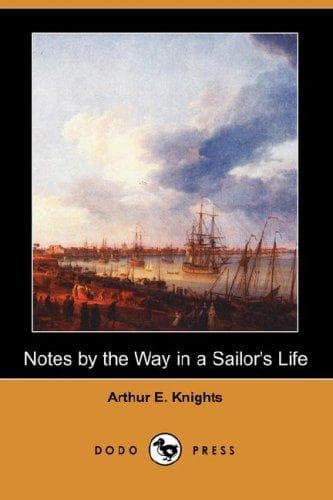
Notes By the Way in a Sailor's LifeKnights, Arthur E.
History
Notes By the Way in a Sailor's Life
Knights, Arthur E.
Knights, Arthur E.; Sailors -- England -- Biography; Seafaring life
After being in port a few days we all left the "Tropic," and I spent a
couple of weeks in seeing Cork and the beautiful country where the
people are so genial and hospitable. After seeing all I wanted to see, I
took steamer from Cork for Bristol, spent one day there, and then left
by train for London. The train left in the evening, and here a rather
amusing incident occurred. I had taken a second-class ticket, and after
taking my seat, it being cold weather, I prepared to make myself
comfortable for the night. In my valise I had a rough sealskin or
Esquimau jacket with a hood to it. I put this on and was nice and warm,
sitting in the corner of the carriage. Shortly afterwards a man in
livery came in and sat in the corner opposite to me. Then came an old
lady and her husband, an Irish army officer returning to India. The old
lady was helped in by the gentleman, but as soon as she saw me she cried
out, "O Lord!" and fell back. Then the old gentleman boosted her in
again, saying, "Go in, you old stupid!" and after the second attempt she
gave it up, saying she wouldn't travel in a menagerie. She had taken me
for a bear, and the man in livery for my keeper. The old gentleman got
in, and she remained on the platform until I assured her that there was
no danger. Then she came in very reluctantly and sat as far away as
possible until we reached Bath, where the man in livery alighted. After
that the old lady, her husband, and I became good friends for the
remainder of the journey.
Memory For Voices.
After the bear incident I spent some time in London, then joined the
emigrant ship "Oriental," bound to Adelaide, South Australia. I was
third officer. We took on board about one hundred families of
excellently selected farm labourers, shepherds, and ploughmen, and after
having made a good voyage arrived safely in Adelaide. The Immigration
Commissioners came on board and inspected the passengers. The result was
most satisfactory. There was no complaint of ill-treatment or deficiency
in supplies, and in less than thirty-six hours every family was engaged
and sent into the country. And the Commissioners awarded to our doctor
fifty pounds sterling, the chief officer fifty pounds for his
supervision, and myself fifty pounds for the supervision of the
commissariat department.
After a short stay in Adelaide, we sailed for Madras, in India, and
after a good voyage we arrived and anchored in the evening when it was
quite dark. There was quite a number of native business men came off in
catamarans and "mussulah," or surf-boats. Among the number was one
noble-looking man, who stepped up near to our captain and, addressing
him, said, "How do you do, Captain Mackintosh?"
"How do you know my name is Mackintosh?"
"By your voice, sahib. When you were here in the 'Lady Mary Harrison,'
eighteen years ago, I was your dubash."
This was quite correct. This man recognized the captain's voice after
all these years.
Public-domain text, read in full here on John Shaqi.
Reviews
Reviews
No reviews yet
Be the first to share your thoughts on this work.
Join the Discussion
Join the discussion
Sign in to leave a comment or review.
Sign InorCreate an account