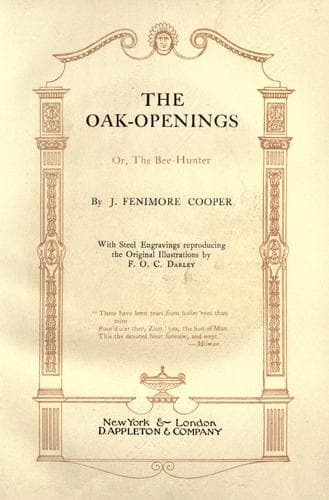
American fiction -- 19th century; Historical fiction; Indians of North America -- Fiction
Corporal Flint was left seated on the log, while the bloody scene of the
missionary's death was occurring. He was fully alive to all the horrors
of his own situation, and comprehended the nature of his companion's
movements. The savages usually manifested so much respect for
missionaries, that he was in no degree surprised. Parson Amen had been
taken apart for his execution, and when those who had caused his removal
returned, the corporal looked anxiously for the usual but revolting
token of his late companion's death. As has been said, however, the
missionary was suffered to lie in his wild grave, without suffering a
mutilation of his remains.
Notwithstanding this moderation, the Indians were getting to be incited
by this taste of blood. The principal chiefs became sterner in their
aspects, and the young men began to manifest some such impatience as
that which the still untried pup betrays, when he first scents his
game. All these were ominous symptoms, and were well understood by the
captive.
Perhaps it would not have been possible, in the whole range of human
feelings, to find two men under influences more widely opposed to each
other than were the missionary and the corporal, in this, their last
scene on earth. The manner of Parson Amen's death has been described. He
died in humble imitation of his Divine Master, asking for blessings on
those who were about to destroy him, with a heart softened by Christian
graces, and a meekness that had its origin in the consciousness of his
own demerits. On the other hand, the corporal thought only of vengeance.
Escape he knew to be impossible, and he would fain take his departure
like a soldier, or as he conceived a soldier should die, in the midst of
fallen foes.
Corporal Flint had a salutary love of life, and would very gladly
escape, did the means offer; but, failing of these, all his thoughts
turned toward revenge. Some small impulses of ambition, or what it is
usual to dignify with that term, showed themselves even at that serious
moment. He had heard around the camp-fires, and in the garrisons, so
many tales of heroism and of fortitude manifested by soldiers who had
fallen into the hands of the Indians, that a faint desire to enroll his
own name on the list of these worthies was beginning to arise in his
breast. But truth compels us to add that the predominant feeling was
the wish to revenge his own fate, by immolating as many of his foes
as possible. To this last purpose, therefore, his thoughts were mainly
directed, during that interval which his late companion had employed in
prayers for those under whose blows he was about to fall. Such is the
difference in man, with his heart touched, or untouched, by the power of
the Holy Spirit.
Public-domain text, read in full here on John Shaqi.
Reviews
Reviews
No reviews yet
Be the first to share your thoughts on this work.
Elsewhere in the archive
Join the Discussion
Join the discussion
Sign in to leave a comment or review.
Sign InorCreate an account