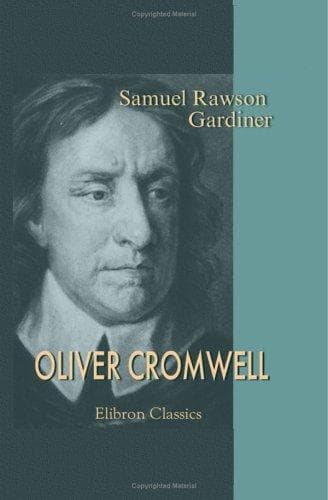
Cromwell, Oliver, 1599-1658; Great Britain -- History -- Commonwealth and Protectorate, 1649-1660
That the Church thus constituted was but a Puritan Church is the
charge commonly brought against the system of the Protectorate. That
it was so is certainly not to be denied, but, after all, it must be
remembered that, so far as opposition to Puritanism was based on
definite religious grounds, and not merely on moral slackness, it was
confined to a comparatively small number of Englishmen. Before the
days of Laud, the clergy of the Church had been for the most part, so
far as their teaching was concerned, Puritan in their ideas, and lax
in their ceremonial observances, and thus the ecclesiastical changes
initiated by the Long Parliament had been received by the bulk of the
laity rather as the removal of innovations than as the establishment of
something entirely new. The honour in which episcopacy and the Prayer
Book were now held was mainly confined to the Royalist gentry and to
scholars expelled from the Universities, and was therefore understood
to be closely connected with political aims. Even so, there was no
attempt as yet on the part of the Government to suppress the use of the
Prayer Book in private houses, and there is reason to suppose that if
no political disturbances had followed, no such attempt would have been
made at a later time. The system of the Protectorate was undoubtedly
the most tolerant yet known in England--more tolerant, indeed, than
public opinion would, if left to itself, have sanctioned.
Not only by its legal reforms did the Protectorate strive to commend
itself to the nation. Oliver had never thrown his heart into the Dutch
war, and a little before he dissolved the Long Parliament, a great
English victory in a battle which began off Portland and ended under
Cape Grisnez, had secured the mastery over the Channel to the English
fleet. That fleet rallied to the new Government; even Blake, who was
hostile at first, accepting the result of political changes, and
finally throwing in his lot with the Protectorate, on the ground that
it was the business of the navy to leave politics alone, and--though
the expression is not traceable on sufficient evidence to Blake's
lips--'to keep foreigners from fooling us'. The wound that Blake
received off Portland incapacitated him from taking a considerable
part in the later battles of the war, the burden lying for the most
part on Monk, who won victories off the Gabbard in June and off the
Texel in July, not long after the nominated Parliament had entered on
its unlucky career. In the latter conflict, Tromp, the great Dutch
admiral whose ill success was due not to any failure of his powers or
to any want of manliness in his crews, but to the inefficiency of the
Government he served, was killed by a shot as he was entering into the
battle. Even whilst the nominated Parliament was still in session, a
negotiation with the Dutch had been opened, and this negotiation, which
was countenanced by Oliver from the first and carried on earnestly by
Public-domain text, read in full here on John Shaqi.
Reviews
Reviews
No reviews yet
Be the first to share your thoughts on this work.
Elsewhere in the archive
Join the Discussion
Join the discussion
Sign in to leave a comment or review.
Sign InorCreate an account