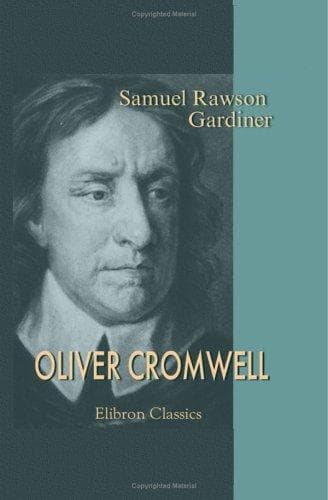
Cromwell, Oliver, 1599-1658; Great Britain -- History -- Commonwealth and Protectorate, 1649-1660
him as Protector, ended in a peace signed on April 5, 1654.
Those who wish to estimate the value of Oliver's foreign policy and
its bearing upon the fortunes of the government he hoped to establish
will do well to study at length the story of his negotiation with
the Dutch, and of his contemporary excursions into the domain of
Continental affairs. It is beyond doubt that he was desirous of peace
with the Dutch on the ground that they were Protestants, and that
he was also desirous of allying himself with other Protestant States
for the protection of Protestants under persecution by Roman Catholic
Governments. Yet, not only did this fail to hinder him from exacting
hard terms from the Dutch, but the motive of his diplomacy is revealed
in his eagerness to make an agreement with his actual enemies a step
to immediate hostilities with other nations. At one time he proposed
a plan for the partition between England and the Netherlands of so
much of the globe as lies outside Europe whilst he was at the same
time negotiating with the Governments of France and Spain, offering to
make common cause with one or the other in the war then raging between
them. No doubt some religious element could be imported into either
quarrel. To help Spain against France, at least in the way he proposed,
was to vindicate the French Protestants against a persecution to which
they were to some extent exposed, in spite of the acceptance by their
Government of the Edict of Nantes. To assist France against Spain was
to weaken the most bigoted Roman Catholic Government in existence.
Public-domain text, read in full here on John Shaqi.
Reviews
Reviews
No reviews yet
Be the first to share your thoughts on this work.
Elsewhere in the archive
Join the Discussion
Join the discussion
Sign in to leave a comment or review.
Sign InorCreate an account