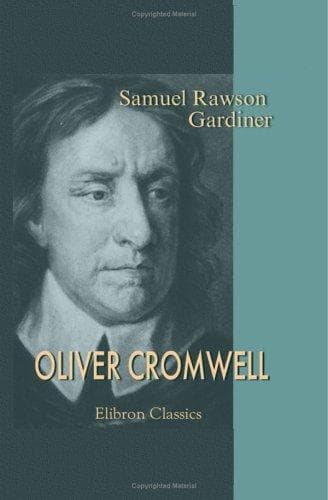
Cromwell, Oliver, 1599-1658; Great Britain -- History -- Commonwealth and Protectorate, 1649-1660
Oliver having once made up his mind to refuse his consent to the new
constitution, was anxious to hasten the dissolution of the Parliament.
The Instrument having provided that the House should sit for five
months, he opportunely remembered that the months by which the army's
pay was regulated were lunar months; and on January 22, 1655, when five
lunar months were expired, he pronounced its dissolution. The speech
in which he announced his determination was stamped with vexation of
spirit at the failure of his hopes, a vexation in itself by no means
unjustifiable. The tragedy of the situation lay in the undoubted fact
that however much they might differ on the means to be pursued, the
end at which Protector and Parliament aimed was identical, namely,
the conversion of the military into the civil state. Parliament had
counted it well done to leave Oliver in possession for five years,
whilst Oliver, conscious of his own rectitude of purpose, and ignoring
the consideration that at the end of five years he might no longer be
living, and that the Protectorate might have passed by demise into
less worthy hands, complained that he was not trusted. Why, he asked,
had they not come to him to talk the matter over? Why indeed, except
that Parliaments have their pride as well as Protectors, and that
this one had come to the conclusion that it was its duty to settle
the constitution rather than to accept a settlement from a knot of
soldiers. If it did not seek an opportunity to discuss such grave
questions with Oliver in person, at least it had had the advantage of
listening to what might be presumed to be his views when promulgated by
those members of his Council who were also members of the House.
In an elaborate defence of the Instrument, Oliver put his finger on
the real ground of offence. "Although," he declared in speaking of the
rights of the Protector, "for the present the keeping up and having in
his power the militia seems the most hard, yet, if it should be yielded
up at such a time as this when there is as much need to keep this cause
by it--which is evidently at this time impugned by all the enemies of
it--as there was to get it, what would become of all? Or if it should
not be equally placed in him and the Parliament, but yielded up at
any time, it determines the Power," _i.e._, hinders the exercise of
authority by the person in possession of power, "either from doing the
good he ought, or hindering Parliaments from perpetuating themselves,
or from imposing what religion they please on the consciences of men,
or what government they please upon the nation; thereby subjecting
us to dis-settlement in every Parliament, and to the desperate
consequences thereof: and if the nation shall happen to fall into a
blessed peace, how easily and certainly will their charge be taken off,
and their forces disbanded; and then, where will the danger be to have
the militia thus stated?"
Public-domain text, read in full here on John Shaqi.
Reviews
Reviews
No reviews yet
Be the first to share your thoughts on this work.
Elsewhere in the archive
Join the Discussion
Join the discussion
Sign in to leave a comment or review.
Sign InorCreate an account