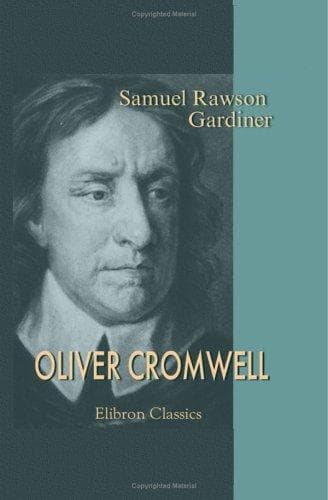
Cromwell, Oliver, 1599-1658; Great Britain -- History -- Commonwealth and Protectorate, 1649-1660
transported without legal trial to Barbados. Such procedure, whether it
be counted as an evasion or as a breach of the law, was evidence of the
difficulty which Oliver would increasingly feel in meeting his enemies
otherwise than by the exertion of arbitrary power.
A more difficult question arose when two judges sent to try Royalist
prisoners in the north doubted their competency, on the ground that
an ordinance defining the offences constituting treason, which the
Protector, in accordance with the Instrument, had issued before
the meeting of Parliament, could not make a rebellion against the
Protectorate to be High Treason. The two judges were at once dismissed,
and soon afterwards Chief Justice Rolle was compelled to resign office
because he was unwilling to enforce the payment of customs upon a
certain Cony; whilst the three lawyers who argued on Cony's behalf--one
of them being Serjeant Maynard, who lived to welcome William III.--that
he was not to pay duties imposed by Protector and Council without the
consent of Parliament, were sent to prison till they had apologised.
One historian after another has accompanied his account of these
proceedings with the observation that there was here a conflict between
law and the tyrant's plea, necessity. There was nothing of the sort.
The question was whether the Instrument was a valid constitution.
If it was, there could be no reasonable doubt that rebels against
the Protectorate were legally traitors, or that customs-duties
applicable to the payment of the army and navy were legally set, not by
Parliament, but by Protector and Council.
Public-domain text, read in full here on John Shaqi.
Reviews
Reviews
No reviews yet
Be the first to share your thoughts on this work.
Elsewhere in the archive
Join the Discussion
Join the discussion
Sign in to leave a comment or review.
Sign InorCreate an account