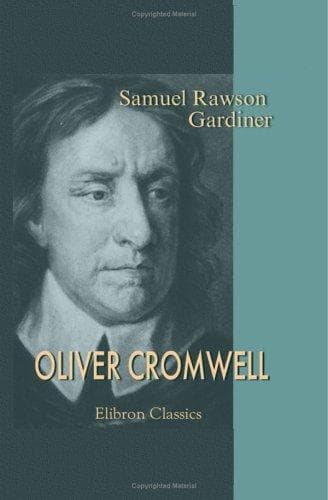
Cromwell, Oliver, 1599-1658; Great Britain -- History -- Commonwealth and Protectorate, 1649-1660
practical form, that, as soon as the existing situation would admit,
the military expenditure should be brought down to the requirements
of the Instrument. The announcement was accompanied by a proclamation
setting forth the principles on which the Protector had decided to act
on the thorny question of religious liberty. There was to be complete
freedom for all who contented themselves with setting forth their
opinions, without 'imposing' on the conscience of others or disturbing
their worship. The last clause, which was aimed at the new Society of
Friends, commonly styled Quakers by the irreverent multitude, sought to
put a stop to their practice of carrying on their polemics in churches
where congregations were assembled. To the exhortations of George Fox
himself the Protector listened with respect. "Come again to my house,"
said Oliver, "for if thou and I were but an hour a day together, we
should be nearer one to the other. I wish you no more ill than I do to
my own soul." A reverence for genuineness, in whatever shape, was not
the least admirable of Oliver's characteristics.
The clause against 'imposing' was more widely sweeping in its aims. It
struck at the claims of the Roman Papacy, and the English episcopacy,
as well as at the designs of the late Parliament to establish lists
of opinions to which toleration should be refused. It struck also at
all attempts to snatch at political power with the object of serving
religious ends. Oliver's breach with Parliament had roused attacks from
every quarter. There were the Fifth Monarchy men who rejected every
form of secular government and whose leaders were not to be silenced
except by placing them under guard. Harrison himself had to be placed
under arrest. It was not work that Oliver would have chosen. "I know,"
wrote Thurloe, "it is a trouble to my Lord Protector to have any one
that is a saint in truth to be grieved or dissatisfied with him." The
Cavaliers might be regarded as hereditary enemies. In the last summer
a Cavalier plot to assassinate the Protector had been discovered,
and two of the plotters, Gerard and Vowel, had been executed. Whilst
Parliament was still in session, Thurloe's spies--who were to be found
in every land in which their services were required--brought him news
of a projected insurrection, and it had been one of Oliver's charges
against the members, that their delay in settling the Government had
fostered the plot. In March futile attempts to rise were made in
various parts of the country, the only one which gained the dignity
of an actual insurrection being that in which Penruddock and others
gathered in arms at Salisbury, seized the judges of assize in their
beds and marched off in the hope of rallying the scattered Royalists
of the west. The insurgents, however, were dispersed in Devonshire,
where many of them were captured. In the end a few of the ringleaders
were tried and executed, whilst a large number of their adherents were
Public-domain text, read in full here on John Shaqi.
Reviews
Reviews
No reviews yet
Be the first to share your thoughts on this work.
Elsewhere in the archive
Join the Discussion
Join the discussion
Sign in to leave a comment or review.
Sign InorCreate an account