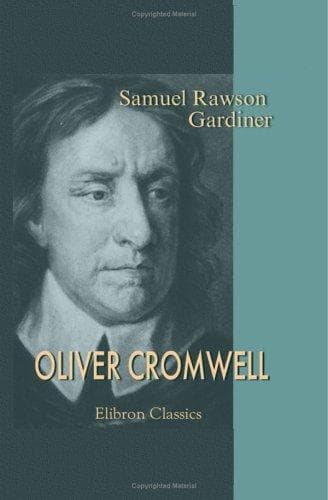
Cromwell, Oliver, 1599-1658; Great Britain -- History -- Commonwealth and Protectorate, 1649-1660
England had at last got a constitution which was no production of
a military coterie. Protector and Parliament were at last at one.
Unfortunately, those who had welcomed this fair concord took little
account of the forces which were likely to govern events in the not far
distant future--the force of the army, whose handiwork had been set at
nought--the force of the Parliamentary tradition strengthened by the
work of the Long Parliament--and, above all, the force of discontent
with the shifting sands on which the new Government was built, a
discontent which might easily show itself in a national call for the
restoration of the Stuart King--not because his person was loved, but
because he would bring with him what appeared to be the strong basis of
old use and wont.
Oliver was not wholly absorbed in constitutional struggles or in
foreign conflicts. In administration his Government stands supreme
above all which had preceded it, because no other ruler united so
wide a tolerance of divergencies of opinion with so keen an eye for
individual merit. He could gather round him the enthusiastic Milton to
pen those dignified State Papers in which he announced his resolutions
to the Powers of Europe; Andrew Marvell, the most transparently
honest of men, who, with all his admiration for Oliver, had mingled
in the verses written by him as a panegyric on his patron those lines
recording Charles's dignified appearance on the scaffold, which will be
remembered when all his other writings in prose or verse are forgotten.
In Oliver's Council sat Bulstrode Whitelocke, the somewhat stolid
lawyer, who, too cautious to give a precedent approval to Oliver's
revolutionary acts, was always ready to accept the situation created by
them, and yet sufficiently inspired by professional feeling to resign
his post as Commissioner of the Great Seal rather than accept the
Protector's reforms in the Court of Chancery. There too sat Nathaniel
Fiennes, the second son of Lord Saye and Sele, not indeed a statesman
with broad views, but ready at any moment to pen State papers in
defence of a Government which had rescued him from the neglect into
which he had fallen--probably undeservedly--in consequence of his hasty
surrender of Bristol in the Civil War. Amongst Oliver's diplomatists
were Morland and Lockhart. Amongst his admirals, the honoured Blake
and the ever-faithful Montague. Amongst those who at one time or
another were his chaplains were Owen, the ecclesiastical statesman, and
Howe, whose exemplary piety led him to doubt whether the Protector's
household was sufficiently religious, and whose broad-minded charity
prepared him to abandon the Church of the Restoration, not because it
was un-Puritan, but because it was exclusive.
Public-domain text, read in full here on John Shaqi.
Reviews
Reviews
No reviews yet
Be the first to share your thoughts on this work.
Elsewhere in the archive
Join the Discussion
Join the discussion
Sign in to leave a comment or review.
Sign InorCreate an account