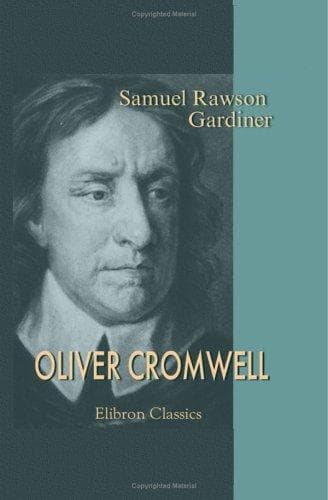
Cromwell, Oliver, 1599-1658; Great Britain -- History -- Commonwealth and Protectorate, 1649-1660
Yet, after all is said, the list of ancient allies driven by the
Protector from public life, and in some cases actually deprived of
liberty, was even more noteworthy. The most placable of men could
hardly have avoided a quarrel with John Lilburne, of whom it was
said that if he alone were left alive in the world, John would
dispute with Lilburne and Lilburne with John; but it is at least
remarkable that under Oliver's sway Vane, whom he had long dealt
with as a brother; Harrison, who had fought under him from the very
beginning of the Civil War, and who had stood by his side when the
members of the Long Parliament were thrust out of doors; Hazlerigg,
who had kept guard over the English border in the crisis of Dunbar;
Okey, who had led the dragoons at Naseby; Overton, the trusted
Governor of Hull, next to London the most important military post in
England; Lambert, who had taken a foremost part in the preparation
of the Instrument of Government; Cooper, who had been one of his
most trusted councillors--to say nothing of confidants of less
conspicuous note--were either in prison or in disgrace. When the second
Protectorate, as it is sometimes called, was launched on its course,
the only man not connected with the family of the Protector, who
still occupied anything like an independent position, was Monk, the
Governor and Commander-in-Chief in Scotland, and it is probable that
he owed his authority to the distance which kept him from interfering
in English politics. The true explanation appears to be that the men
from whom Oliver parted were men not merely of definite principles, but
of definite ideas. Each one had made up his mind that England was to
be served by the establishment of some particular form of government,
or some particular course of action. Oliver's mind was certainly not
without the guidance of definite principles. He could not conceive it
to be right to abandon religion to men who, whether Episcopalian or
Presbyterian, would impose fetters on the freedom of 'the people of
God'. He could not admit the claim of an hereditary monarch or of an
elected Parliament to decide against the best interests of the country.
Within these limits, however, his mind was more elastic than those of
his opponents. Steadied by his high aims, he could vary the methods
with which he combated each evil of the day as it arose. Those who
attached themselves to him in his struggle against the King or against
the different Parliaments of his time, or against the military power,
were as incapable as he was capable of facing round to confront each
new danger as it arose. From the moment that each partial victory was
won, the old friends had to be reasoned with, then discarded, and at
last restrained from doing mischief. As years went on, Oliver, in spite
of the abilities of those still serving under him, became increasingly
an isolated man. Not only did his strong sense of religion in its
Puritan form alienate those who were not Puritans or not religious,
Public-domain text, read in full here on John Shaqi.
Reviews
Reviews
No reviews yet
Be the first to share your thoughts on this work.
Elsewhere in the archive
Join the Discussion
Join the discussion
Sign in to leave a comment or review.
Sign InorCreate an account