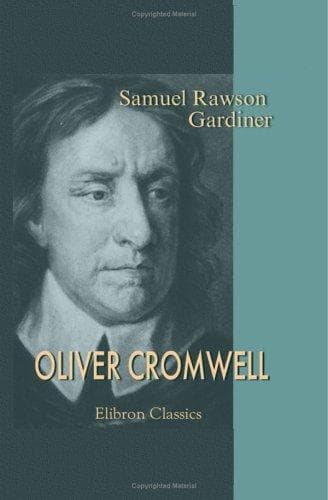
Cromwell, Oliver, 1599-1658; Great Britain -- History -- Commonwealth and Protectorate, 1649-1660
but his frequent changes of attitude bewildered that easy-going mass
of mankind which sticks to its own theory, more especially if its own
interests are embodied in it, and regards all change of political
method as a veil intended to conceal moral turpitude. Oliver had
decidedly lost adherents since the establishment of the Protectorate.
It was probably the increasing sense of the untrustworthiness of
political support, rather than nepotism in its ordinary sense, which
led the Protector to rely more and more on the services of members of
his own family. His younger son, Henry Cromwell, was now Lord Deputy
of Ireland. His son-in-law, Fleetwood, was not only a member of the
Council, but, now that Lambert was in disgrace, the most influential
officer in the army, marked out for its command if Oliver were to
pass away. His brother-in-law, Desborough, occupied a position hardly
inferior. Two other brothers-in-law, Colonel John Jones and Colonel
Valentine Wauton, were members of the Council in England or Ireland.
Lockhart, one of the few Scotchmen who had rallied to the Protectorate,
and who was engaged as a diplomatist in riveting the bonds between
France and England, took to wife the Protector's niece. A son-in-law,
John Claypole, was now Master of the Horse. In the army, Whalley and
Ingoldsby were his cousins. Not one of these, however, failed to occupy
with credit the position he had acquired, whilst Oliver's reluctance
to push forward Richard, the elder of his surviving sons, may be taken
as evidence that his affection for his family did not override his
devotion to the State. Richard's tastes lay in the direction of dogs
and horses. He had recently broken his leg, hunting in the New Forest,
and, upon his recovery, was brought up to Westminster to assume his
place, on the establishment of the second Protectorate. Before that
time, only two of the Councillors not holding other office, Lambert
and Strickland, had received the title of "Lord," probably having it
verbally conferred upon them, and certainly not, as has been sometimes
said, in connection with any Household appointment. Officials of
high rank had--like the Lord Deputy and the Lord Keeper of the old
monarchy--been entitled Lords, as in the case of Whitelocke, now Lord
Commissioner of the Treasury, and Fiennes, Lord Commissioner of the
Great Seal. Gradually usage, quickly sanctioned by official notice,
gave the title of Lord to the Protector's sons and sons-in-law, and
of Lady to his daughters. The Lord Richard was only admitted to the
Council on the last day of 1657, and was treated with some of the
observances due to the heir, but till the last his father held back
from exercising that power of nominating a successor which had been
conferred on him by the latest constitution.
Public-domain text, read in full here on John Shaqi.
Reviews
Reviews
No reviews yet
Be the first to share your thoughts on this work.
Elsewhere in the archive
Join the Discussion
Join the discussion
Sign in to leave a comment or review.
Sign InorCreate an account