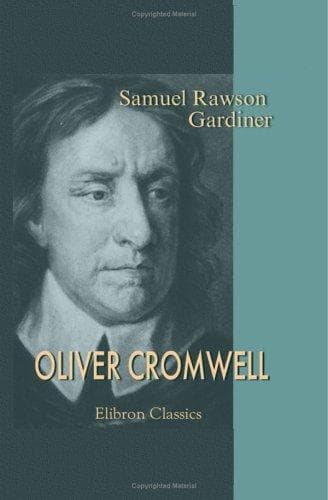
Cromwell, Oliver, 1599-1658; Great Britain -- History -- Commonwealth and Protectorate, 1649-1660
There can be little doubt that the maintenance of a war in the heart of
Germany, even with a Swedish ally, would have been far beyond Oliver's
means. The occupation of the Flemish ports had taxed his resources to
the uttermost. In the speech in which he had sung the high praises of
the Swedish king, he had been obliged to plead the necessities of the
army as a ground for his demand for fresh supplies. The pay of the army
was far in arrear, and it was on the army that he depended to keep down
hostile parties at home and to stave off a Royalist attack from abroad.
Nor was that army needed for purposes of mere defence. Picturing to
himself the majority of the Continental nations as actuated by a wild
desire to assail England, he inferred that attack was the best defence.
"You have counted yourselves happy," he said to Parliament, "in being
environed with a great ditch from all the world beside. Truly you will
not be able to keep your ditch, nor your shipping, unless you turn your
ships and shipping into troops of horse and companies of foot; and
fight to defend yourselves on _terra firma_."
This then was what Oliver's much-lauded foreign policy had come
to--more regiments, and even higher taxation than what the vast
majority of Englishmen believed to be far too high already. A great
Continental war, with all its risks and burdens, was dangled before the
eyes of a Parliament to which such an outlook had no attractions. That
Parliament was no longer the body which had voted the new constitution.
Not only were there now two Houses, but the composition of the older
House had been significantly altered. The most determined supporters of
the Protectorate had been withdrawn to occupy the benches of the new
House, whilst the clause of _The Humble Petition and Advice_, which
prohibited the Protector from ever again excluding members duly elected
from what had now become the House of Commons, opened its doors to
his most determined enemies. The men who now found their way to their
seats, such as Hazlerigg and Scott, were opposed heart and soul to the
whole system of the Protectorate, and longed for the re-establishment
of Parliamentary supremacy. Such men were the more dangerous because
they were sufficiently versed in Parliamentary tactics to know the
advantage of a rallying cry which would bring the lukewarm to their
side. The powers and attributes of the other House were ill-defined
in the constitutional document to which it owed its birth, and it was
easy to gain adherents by urging that it was not entitled either to the
name or the privileges of the House of Lords of the Monarchy. After
some days of wrangling, the Protector resolved to put an end to the
debates. It was hard, he complained, to have accepted a constitutional
settlement on the invitation of that very Parliament, and then to have
it brought into question. "I can say," he continued, "in the presence
of God--in comparison with whom we are but like poor creeping ants upon
Public-domain text, read in full here on John Shaqi.
Reviews
Reviews
No reviews yet
Be the first to share your thoughts on this work.
Elsewhere in the archive
Join the Discussion
Join the discussion
Sign in to leave a comment or review.
Sign InorCreate an account