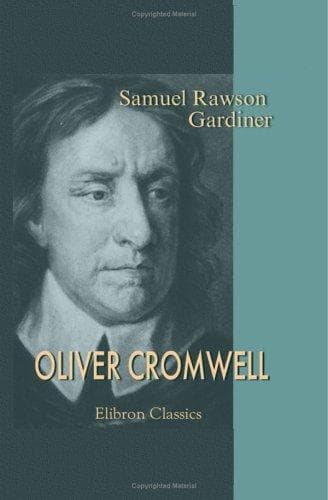
Cromwell, Oliver, 1599-1658; Great Britain -- History -- Commonwealth and Protectorate, 1649-1660
sake. And give us a good night, if it be Thy pleasure. Amen."
[E] Her second marriage with Sir John Russell took place
after the Restoration.
Before long hope ceased to be possible. Oliver himself knew that his
life was rapidly drawing to an end. "I would," he said, "be willing to
be further serviceable to God and His people, but my work is done." A
few more prayers, a few more words, and on September 3, the anniversary
of Dunbar and Worcester, as well as of the hopeful meeting of his first
Parliament, the tried servant of God and of his country entered into
the appointed rest from all his labours.
The man--it is ever so with the noblest--was greater than his work.
In his own heart lay the resolution to subordinate self to public
ends, and to subordinate material to moral and spiritual objects of
desire. His work was accomplished under the conditions to which all
human effort is subject. He was limited by the defects which make
imperfect the character and intellect even of the noblest and the
wisest of mankind. He was limited still more by the unwillingness of
his contemporaries to mould themselves after his ideas. The blows that
he had struck against the older system had their enduring effects.
Few wished for the revival of the absolute kingship, of the absolute
authority of a single House of Parliament, or of the Laudian system of
governing the Church. In the early part of his career Oliver was able
to say with truth of his own position: "No one rises so high as he who
knows not whither he is going". The living forces of England--forces
making for the destruction of those barriers which he was himself
breaking through, buoyed him up--as a strong and self-confident
swimmer, he was carried onward by the flowing tide. In the latter
portion of the Protector's career it was far otherwise. His failure to
establish a permanent Government was not due merely to his deficiency
in constructive imagination. It was due rather to two causes: the
umbrage taken at his position as head of an army whose interference in
political affairs gave even more offence than the financial burdens it
imposed on a people unaccustomed to regular taxation; and the reaction
which set in against the spiritual claims of that Puritanism of which
he had become the mouthpiece. The first cause of offence requires
no further comment. As for the second, it is necessary to lay aside
all sectarian preoccupations, if ever a true historic judgment is
to be formed. It was no reaction against the religious doctrines or
ecclesiastical institutions upheld by the Protector that brought about
the destruction of his system of government. It is in the highest
degree unlikely that a revolution would ever have taken place merely
to restore episcopacy or the Book of Common Prayer. So far as the
reaction was not directed against militarism, it was directed against
the introduction into the political world of what appeared to be too
Public-domain text, read in full here on John Shaqi.
Reviews
Reviews
No reviews yet
Be the first to share your thoughts on this work.
Elsewhere in the archive
Join the Discussion
Join the discussion
Sign in to leave a comment or review.
Sign InorCreate an account