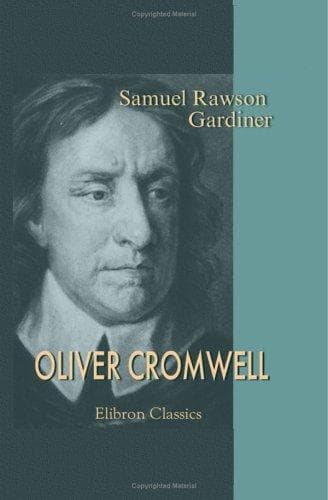
Cromwell, Oliver, 1599-1658; Great Britain -- History -- Commonwealth and Protectorate, 1649-1660
high a standard of morality, a reaction which struck specially upon
Puritanism, but which would have struck with as much force upon any
other form of religion which, like that upheld by Laud, called in the
power of the State to enforce its claims.
Nor is this all that can be said. Even though Oliver was in his own
person no sour fanatic, as Royalist pamphleteers after the Restoration
falsely asserted; it is impossible to deny that he strove by acts of
government to lead men into the paths of morality and religion beyond
the limit which average human nature had fixed for itself. In dealing
with foreign nations his mistake on this head was more conspicuous,
because he had far less knowledge of the conditions of efficient action
abroad than he had at home. It may fairly be said that he knew less of
Scotland than of England, less of Ireland than of Great Britain, and
less of the Continent than of any one of the three nations over which
he ruled. It has sometimes been said that Oliver made England respected
in Europe. It would be more in accordance with truth to say that he
made her feared.
It is unnecessary here to pursue this subject further. The development
of this theme is for the historian of England rather than for the
biographer of the Protector. Oliver's claim to greatness can be
tested by the undoubted fact that his character receives higher and
wider appreciation as the centuries pass by. The limitations on his
nature--the one-sidedness of his religious zeal, the mistakes of his
policy--are thrust out of sight, the nobility of his motives, the
strength of his character, and the breadth of his intellect, force
themselves on the minds of generations for which the objects for which
he strove have been for the most part attained, though often in a
different fashion from that which he placed before himself. Even those
who refuse to waste a thought on his spiritual aims remember with
gratitude his constancy of effort to make England great by land and
sea; and it would be well for them also to be reminded of his no less
constant efforts to make England worthy of greatness.
Of the man himself, it is enough to repeat the words of one who knew
him well: "His body was well compact and strong; his stature under six
feet--I believe about two inches--his head so shaped as you might see
it a store-house and shop both--of a vast treasury of natural parts.
His temper exceeding fiery, as I have known; but the flame of it kept
down for the most part, or soon allayed with those moral endowments
he had. He was naturally compassionate towards objects in distress,
even to an effeminate measure; though God had made him a heart wherein
was left little room for any fear but was due to Himself, of which
there was a large proportion--yet did he exceed in tenderness towards
sufferers. A larger soul, I think, hath seldom dwelt in a house of
clay."
ABERDEEN: THE UNIVERSITY PRESS.
* * * * * *
Transcribers' note:
Public-domain text, read in full here on John Shaqi.
Reviews
Reviews
No reviews yet
Be the first to share your thoughts on this work.
Elsewhere in the archive
Join the Discussion
Join the discussion
Sign in to leave a comment or review.
Sign InorCreate an account