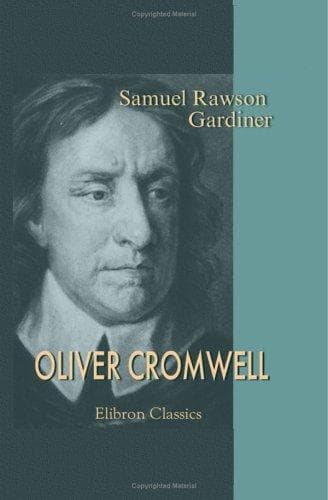
Cromwell, Oliver, 1599-1658; Great Britain -- History -- Commonwealth and Protectorate, 1649-1660
Whilst episcopacy found its main support in the King, the sects found
their main support in the army, and Parliament at once fell in with
the popular demand for weakening the army. Before February was over,
it had resolved that 6,600 horse and dragoons should be retained in
England, but that, except the men needed for a few garrisons, none of
the infantry of the New Model Army should be kept in the service. Their
place was to be supplied by a militia which, consisting as it did of
civilians pursuing their usual avocations for the greater part of the
year, and, except in times of invasion or rebellion, only called out
for a few days' drill, would be most unlikely to join in any attempt
to cross the wishes of Parliament. Cavalry, moreover, being, in the
long run, unable to act without the support of infantry, the 6,600
horse kept on foot would be powerless to impose a policy by force on
the Parliament. As more than half of the infantry, whose services in
England were no longer required, would be needed to carry on the war in
Ireland, now almost entirely in the hands of the so-called rebels, it
was thought that the number necessary for this purpose would volunteer
for service in that country, and the rest be readily induced to return
amongst the civilian population out of which they had sprung.
Having thus, in imagination, weakened the army as a whole, the
Presbyterian majority proceeded to deal with the officers of
the cavalry destined for service in England. Retaining Fairfax
as Commander-in-Chief, they voted that no officer should serve
under him who refused to take the Covenant, and to conform to the
Church-government established by Parliament. They also voted that,
with the exception of Fairfax, no officer should hold a higher rank
than that of colonel; in other words, they pronounced the dismissal of
Lieutenant-General Cromwell from the service. It was characteristic
of Cromwell that in a letter written by him to Fairfax his personal
grievance finds no place. "Never," he writes, "were the spirits of men
more embittered than now. Surely the Devil hath but a short time. Upon
the Fast-day," he adds in a postscript, "divers soldiers were raised,
as I heard, both horse and foot--near two hundred in Covent Garden--to
prevent us soldiers[C] from cutting the Presbyterians' throats! These
are fine tricks to mock God with." Yet, irritated as he was, he gave no
sign of any thought of resistance. "In the presence of Almighty God,
before whom I stand," he declared to the House, "I know the army will
disband and lay down their arms at your door whenever you will command
them." His own dismissal he took calmly. Towards the end of March he
was in frequent conference with the Elector Palatine who had offered
him a command in Germany, where the miserable Thirty Years' War was
still dragging on, and where the cause of toleration, apparently lost
in England, might possibly be served.
Public-domain text, read in full here on John Shaqi.
Reviews
Reviews
No reviews yet
Be the first to share your thoughts on this work.
Join the Discussion
Join the discussion
Sign in to leave a comment or review.
Sign InorCreate an account