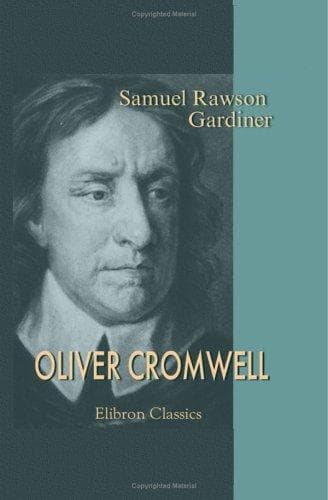
Cromwell, Oliver, 1599-1658; Great Britain -- History -- Commonwealth and Protectorate, 1649-1660
thing they insist upon, and that four months' pay would have given
satisfaction."
Such an event could not but drive Cromwell to reconsider his position.
Whether he liked it or not, the army had, through the bungling of the
Presbyterian leaders, broken loose from the authority of Parliament. It
was impossible for him to give his support to Parliament when it was
about, with the aid of the Scottish army, to restore the King on terms
which, whether the King or the Presbyterians gained the upper hand
in the game of intrigue which was sure to follow, could only end in
the destruction of that religious liberty for the sects which, though
without legal sanction, had been gained as a matter of fact. Yet the
alternative seemed to be the abandonment of the country to military
anarchy, or if that were averted to the sway of the army over the
State. Only one way of escape from the dilemma presented itself, and
that way Cromwell seized.
Cromwell, it must once more be said, was no Republican or Parliamentary
theorist. Parliament was to him mainly an authority under which he
had fought for the great ends he had in view. Now that it had sunk
to be no more than a tool in the hands of politicians who, aiming at
the establishment of an ecclesiastical despotism, could think of no
better means wherewith to compass their evil ends than the rekindling
of the conflagration of civil war with the aid of a Scottish army and
of French diplomacy, and who had proved themselves bunglers in their
own noxious work, it was necessary to look about for some fresh basis
of authority, which would save England from the danger of falling
under the sway of a Prætorian guard. Nor was that basis far to seek.
Cromwell had fought the King unsparingly--not to destroy him, but to
reduce him to the acceptance of honourable terms. The terms which the
Presbyterians had offered to Charles had not been honourable. They had
demanded that he should proscribe his own religion and impose upon his
subjects an ecclesiastical system which he believed to be hateful to
God and man. Was this to be the result of all the blood and treasure
that had been expended? What if the King could be won to bring back
peace and good government to the land by fairer treatment and by the
restoration of his beneficent authority? The call for a restoration of
the King to power did not arise merely from the monarchical theories
of a few enthusiasts. It was deeply rooted in the consciousness of
generations. A few years before it had been inconceivable to Englishmen
that order could be maintained without a king, and with the great mass
of Englishmen this view was still prevalent. We can hardly go wrong if
we suppose that Cromwell shared the hope that Charles, by more generous
treatment than that which Parliament had accorded to him, would allow
the chiefs of the army to mediate between him and Parliament, and
consent to accept the restitution of so much of his authority as would
Public-domain text, read in full here on John Shaqi.
Reviews
Reviews
No reviews yet
Be the first to share your thoughts on this work.
Join the Discussion
Join the discussion
Sign in to leave a comment or review.
Sign InorCreate an account