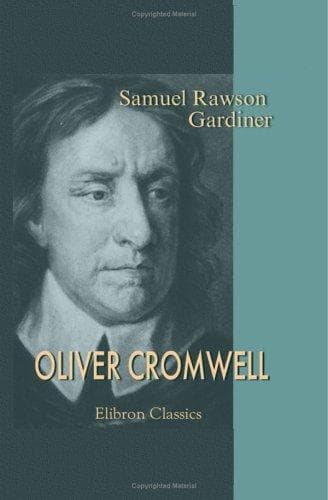
Cromwell, Oliver, 1599-1658; Great Britain -- History -- Commonwealth and Protectorate, 1649-1660
There is reason to believe that Cromwell's instructions only gave
authority for the removal of the King from Holmby conditionally on its
appearing that he could in no other way be preserved from abduction by
the Presbyterians. When on June 1 Joyce arrived at Oxford, he found
that the garrison had resolved to refuse the delivery of the guns, and
on the following day he marched on to Holmby with some 500 horsemen
at his back. On his arrival Graves took to flight, and the garrison
of the place at once fraternised with the new-comers. In the early
morning of the 3rd Joyce, followed by his men, was let in by a back
door asserting that he had come to hinder a plot 'to convey the King
to London without directions of the Parliament'. "His mission," he
further stated, was "to prevent a second war discovered by the design
of some men privately to take away the King, to the end he might side
with that intended army to be raised; which, if effected, would be the
utter undoing of the kingdom." To this profession his actions were
suitable. During the whole of the day he remained quiet, never hinting
for an instant that he had any intention of doing more than preserve
the King's person against violence. In the course of the day, however,
he took alarm at some rumours of an impending attack, and made up his
mind, probably nothing loth, that the danger could only be met by
removing the King to safer quarters. About half-past ten at night he
roused Charles from his slumbers, invited him to follow him on the
following morning, and on giving assurances that no harm would follow
received the promise he required. On the morning of the 4th, as Charles
stepped from the door of the house, he was confronted by Joyce and his
500 troopers. The King at once asked whether Joyce had any commission
for what he was doing. "Here," replied Joyce, turning in the saddle as
he spoke, and pointing to the soldiers he headed, "is my commission. It
is behind me." "It is a fair commission," replied Charles, "and as well
written as I have seen a commission in my life: a company of handsome,
proper gentlemen, as I have seen a great while." Having selected
Newmarket as his place of residence, Charles not unwillingly, as it
seemed, set out in this strange companionship. On that very morning, or
on the previous evening, Cromwell, feeling himself no longer safe at
Westminster, slipped away and rode off to join the army at Newmarket.
Both Fairfax and Cromwell declared for the King's return to Holmby,
no doubt considering Joyce's removal of the King to be unnecessary,
and, under the circumstances, unauthorised. It was only on Charles's
positive refusal to return that he was allowed to continue his journey.
Public-domain text, read in full here on John Shaqi.
Reviews
Reviews
No reviews yet
Be the first to share your thoughts on this work.
Join the Discussion
Join the discussion
Sign in to leave a comment or review.
Sign InorCreate an account