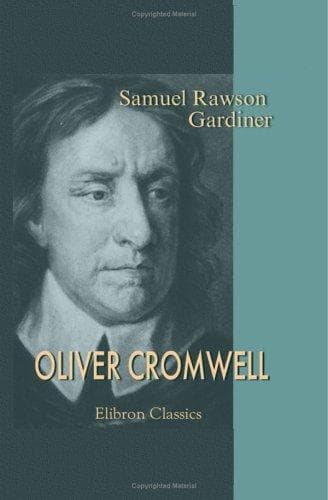
Cromwell, Oliver, 1599-1658; Great Britain -- History -- Commonwealth and Protectorate, 1649-1660
Though the invading army entered England by way of Carlisle, Cromwell
marched against them not through Lancashire but through Yorkshire.
He had to supply his men with shoes and stockings from Northampton
and Coventry, and to halt at Doncaster to pick up the artillery which
was forwarded him from Hull, as well as to rejoin Lambert, who was in
command of the small force which it had been possible to despatch to
the North whilst Cromwell was detained at Pembroke, and who had been
doing his best to delay the progress of the Scots till Cromwell was
ready to strike home. On its march through Lancashire, Hamilton's army,
some 21,000 strong, pushed slowly forward in a long straggling column,
the van and the rear at too great distance from each other to be able
to concentrate in case of an attack. On August 17, when Cromwell had
crossed the hills into Ribblesdale and was close at hand upon his
left flank, Hamilton, who had pushed on his cavalry to Wigan sixteen
miles in advance, sent the bulk of his infantry across the Ribble at
Preston, leaving Sir Marmaduke Langdale with 3,600 English Royalists
on the north bank, whilst another detachment was some miles in the
rear. It did not need much generalship to overwhelm an army under
such leadership as this. Cromwell fell upon Langdale, who had posted
his small force to the greatest advantage behind hedges, and after a
hard tussle, carried the position and captured the greater part of
the division. Then lining the steep northern bank of the Ribble with
musketeers, he drove Hamilton from the flat southern bank and, later
on, across the Darwen which, near this point, flows into the Ribble.
What followed was little more than mere pursuit. The Scots, half
starved and discouraged, were beaten wherever they attempted to make a
stand, and Hamilton at last surrendered at Uttoxeter, eight days after
the battle.
It was Cromwell's first victory in an independent command, and if the
Scottish leader had played into his hands, he had been wanting in no
part of an efficient general to profit by his folly. Once more, in the
despatch in which he announced his success to the Speaker, he harped
upon the old string, the duty of the Parliamentary Government to give
protection to the 'people of God'. "Surely, Sir," he wrote, "this is
nothing but the hand of God, and wherever anything in this world is
exalted or exalts itself, God will put it down; for this is the day
wherein He alone will be exalted. It is not fit for me to give advice,
nor to say a word what use you should make of this; more than to pray
you and all that acknowledge God, that they would take courage to do
the work of the Lord in fulfilling the end of your magistracy in
seeking the peace and welfare of this land; that all that will live
peaceably may have countenance from you, and they that are incapable
and will not leave troubling the land may speedily be destroyed out of
the land."
Public-domain text, read in full here on John Shaqi.
Reviews
Reviews
No reviews yet
Be the first to share your thoughts on this work.
Elsewhere in the archive
Join the Discussion
Join the discussion
Sign in to leave a comment or review.
Sign InorCreate an account