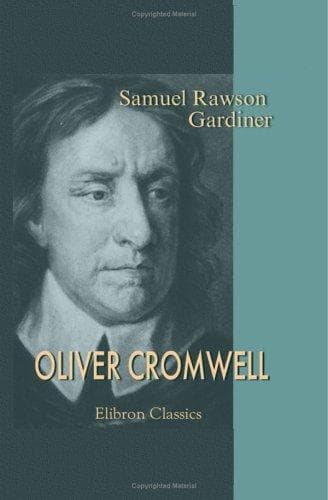
Cromwell, Oliver, 1599-1658; Great Britain -- History -- Commonwealth and Protectorate, 1649-1660
On August 27, ten days after the victory at Preston, Colchester
capitulated, and as far as England was concerned, the second civil war
was brought to an end, only a few fortresses in the North--incapable of
prolonged resistance without succour from any army in the field--still
holding out. It remained to be considered what policy should be adopted
towards the defeated Scots, and first of all towards the thousands of
prisoners captured at Preston and in the pursuit which followed. Of
these a division was made--those who had been pressed into the service
being set at liberty under an engagement never again to bear arms
against the Parliament of England. Those who had voluntarily taken
service under Hamilton were transported to Barbados or Virginia, not,
as is commonly said, as slaves, but as servants subjected for a term
of years to a master who, though he usually dealt with them far more
harshly than with his negro slaves, was at least bound to set them at
liberty at the end of the appointed time.
The decision in this matter rested with Parliament--not with Cromwell.
It was for Cromwell to follow up the relics of the Scottish army left
behind to the north of Preston, and which, after the defeat of their
comrades, had retreated to Scotland. Nor could it be doubted that the
word of the victorious general would have great weight with Parliament
in that settlement of the outstanding complaints against Scotland which
was now impending. It was fortunate that this was so, as Cromwell was
just the man to turn to the best advantage the dispute between the
Scottish parties now bursting into a flame. The defeat of Hamilton
left the way open to Argyle and that party of the more fanatical
clergy whose followers in the strongly Presbyterian West were known as
Whiggamores, an appellation from which the later appellation of Whig
was derived. The West rose in arms, and the Whiggamore Raid--as it was
called--swept from power those few partisans of Hamilton who were still
at liberty, and placed Scotland once more in the hands of Argyle and
the clergy. On September 21, whilst the conflict was yet undecided,
Cromwell entered Scotland, demanding the surrender of Berwick and
Carlisle, still occupied by Scottish garrisons. Argyle, glad of English
support to strengthen his nascent authority, gave a hearty consent;
and, to display the overwhelming strength of the English army to
the Scottish people, Lambert was sent forward in advance, Cromwell
following with the bulk of the army and arriving in Edinburgh on
October 4. On the 7th Cromwell returned to England, leaving Argyle
under the protection of Lambert at the head of two regiments of horse.
In the meanwhile Cromwell had come to an understanding with Argyle
that no Scotsman who had supported the Engagement with Charles should
be allowed to retain office, a stipulation as much in accordance with
Argyle's wishes as with his own. A fanatic might have objected that it
Public-domain text, read in full here on John Shaqi.
Reviews
Reviews
No reviews yet
Be the first to share your thoughts on this work.
Elsewhere in the archive
Join the Discussion
Join the discussion
Sign in to leave a comment or review.
Sign InorCreate an account