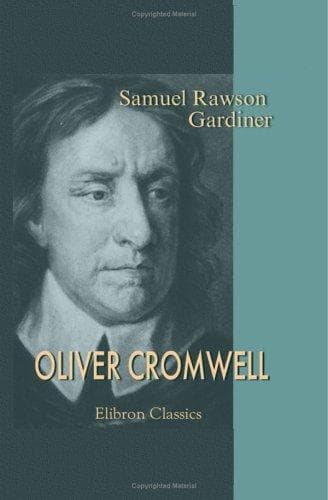
Cromwell, Oliver, 1599-1658; Great Britain -- History -- Commonwealth and Protectorate, 1649-1660
oppose and fight against the King upon some stated grounds; and, being
in power to such ends,' might not they oppose 'one name of authority
for these ends as well as another name'? Whatever might be the worth of
these considerations, no good was to be expected from Charles. "Good,"
he protested, "by this man against whom the Lord hath witnessed, and
whom thou knowest!"
Surely we have here laid bare before us Cromwellian opinion in the
making. As in other men, the wish was father to the thought. The
desire, whether for private or for public ends, shapes the thoughts,
and in Cromwell's case, as the desires swept a wider compass than with
most men, the thoughts took a larger scope and, to some extent, jostled
with one another. The cloudy mixture would clear itself soon enough.
Meanwhile events followed quickly on one another in the south. Hammond,
as too soft-hearted, was removed from Carisbrooke, and on December 1
emissaries from the army removed Charles to Hurst Castle, where he
could be more easily isolated. The foremost men in the army talked
openly of putting the King to death, and adopted Cromwell's suggestion
that Parliament should be forcibly dissolved, and a new one elected
in its place. In this sense a Declaration was issued on November 30,
and on December 2 the army marched into London. The Commons showed
themselves to be unaffected by threats of violence, and voted on the
5th that the King's offers were 'a ground for the House to proceed
upon for the settlement of the peace of the kingdom'. The scheme of
a dissolution favoured by the army was wrecked on the resistance of
the Independent members of the House. There was to be a purge, not
a dissolution followed by a general election. The plan thus agreed
on was carried into practice on the morning of the 6th, when Colonel
Pride stood with a military guard at the door of the House, turning
back or arresting the members who had voted for a continuance of the
negotiation with the King. When Cromwell returned to Westminster,
on the evening of the same day, he declared that he had not 'been
acquainted with the design; yet, since it was done, he was glad of it,
and would endeavour to maintain it'. As 'Pride's purge' had not been
resolved on before the previous night it was physically impossible
that he should have been informed of the resolution taken. There can
be little doubt that he had given his sanction to the other plan of a
dissolution, and had also concurred in the language ascribed to Ireton
and Harrison on the previous evening. "Where," they had said of the
House, "have we either law, warrant, or commission to purge it, or can
anything justify us in doing it but the height of necessity to save the
kingdom from a new war that they, with the conjunction of the King,
will presently vote and declare for, and to procure a new and free
representative, and so successive and free representatives, which this
present Parliament will never suffer, and without which the freedoms of
Public-domain text, read in full here on John Shaqi.
Reviews
Reviews
No reviews yet
Be the first to share your thoughts on this work.
Elsewhere in the archive
Join the Discussion
Join the discussion
Sign in to leave a comment or review.
Sign InorCreate an account