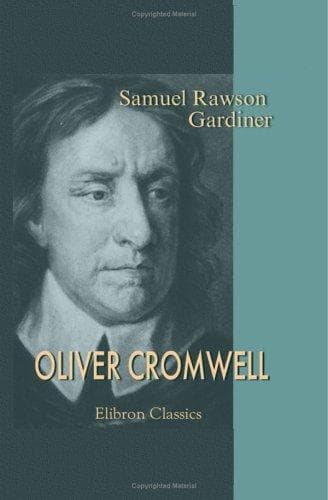
Cromwell, Oliver, 1599-1658; Great Britain -- History -- Commonwealth and Protectorate, 1649-1660
This proposal made to the King on the 16th was, however, rejected at
once. The feeling of the army being what it was, Charles virtually
signed his own death-warrant by this action, and it might seem to a
superficial observer, as if his sufferings were due to his refusal to
anticipate two centuries of history, and to abandon all the claims
which had been handed down to him by his predecessors. To the careful
inquirer, it is evident that the causes of the army's demand lay far
deeper. The men who made it were no constitutional pedants. It was the
deep distrust with which Charles had inspired them that led to this
drastic mode of setting him aside from the exercise of that authority
which he had so constantly abused. It was his avoidance of open and
honourable speech which brought Charles to the block. Those who imagine
that he was brought to the scaffold because of his refusal to submit
to the abolition of episcopacy, forget that it had been in his power
to secure the retention of episcopacy when it was offered him in
_The Heads of the Proposals_, if only he had consented to its being
accompanied by a complete toleration.
The effect of the news which Cromwell from time to time received from
the army in England may be traced in the letters written by him at this
time. In one which he sent to Hammond on November 6 he justified his
dealings with Argyle, suggesting that the example of Scotland, where
one Parliament had been dissolved and another had been elected, might
be followed in England. In a second letter, written on the 20th, after
he had had time to consider the rejection by Charles of the proposal
of the army, he replied bitterly to an order of the House to send up
Sir John Owen, a prisoner taken in Wales, that he might be banished.
Cromwell angrily wrote that those who brought in the Scots had been
adjudged traitors by Parliament, 'this being a more prodigious treason
than any that had been perfected before; because the former quarrel was
that Englishmen might rule over one another, this to vassalise us to
a foreign nation, and their fault who have appeared in this summer's
business is certainly double theirs who were in the first, because it
is the repetition of the same offence against all the witnesses that
God has borne, by making and abetting a second war'. "To vassalise us
to a foreign nation." Here, in political matters at least, was the
head and front of Charles's offending. It was this that finally broke
down Cromwell's reluctance to shake himself loose from constituted
authority. "God," Hammond had written, "hath appointed authorities
among the nations, to which active or passive obedience is to be
yielded. This resides in England in the Parliament. Therefore active or
passive resistance is forbidden." To this reasoning Cromwell replied,
on the 25th, by various arguments, closing with the daring suggestion
that the army might, after all, be 'a lawful power called by God to
Public-domain text, read in full here on John Shaqi.
Reviews
Reviews
No reviews yet
Be the first to share your thoughts on this work.
Elsewhere in the archive
Join the Discussion
Join the discussion
Sign in to leave a comment or review.
Sign InorCreate an account