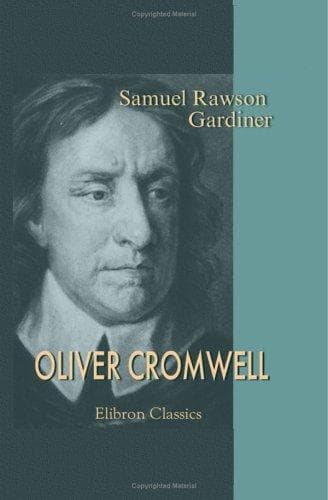
Cromwell, Oliver, 1599-1658; Great Britain -- History -- Commonwealth and Protectorate, 1649-1660
In these words are revealed the convictions that dominated Cromwell's
action at this period of his life. So far as it lay in him, he would
never admit that Scotland, still less that Ireland, should impose a
government upon England. On July 12 he set out for Ireland. Before
he could embark he received the welcome news that Michael Jones had
defeated Ormond at Rathmines, and that Dublin was consequently out
of danger. When he landed at Dublin, his intention was, as soon
as possible, to make his way into Munster and rally round him the
Protestant colonists who formed a considerable part of the population
of the towns on the coast. It was, however, necessary first to protect
Dublin from an attack from the north, from which quarter Owen O'Neill,
who, after long hesitation, had thrown in his lot with Ormond, was
expected to advance. Accordingly, on September 1, Cromwell marched
upon Drogheda, which was held for the King by a garrison of about
2,800 men, mainly composed of Irishmen, under Sir Arthur Aston. On the
10th Cromwell summoned the place, and on the refusal of the governor
to surrender opened a cannonade on the south-eastern angle. It was
impossible for the garrison--short of ammunition as it was--to hold out
long, and on the second day, when a breach had been effected, Cromwell
gave the word to storm. The assailants, though twice driven back, were,
on the third attempt, successful. Aston, with about three hundred men,
took refuge on a huge artificial mound, known as the Mill Mount. Angry
at the prolonged resistance, Cromwell gave the word to put to the sword
all who were in arms. The hasty word was ruthlessly obeyed, and some
two thousand men were slaughtered in cold blood. There is no doubt that
in what he did, Cromwell was covered by the strict law of war, which
placed a garrison refusing surrender outside the pale of mercy; but the
law had seldom been acted on in the English war, and it is permissible
to doubt whether Cromwell would have acted on it on this occasion, if
the defenders had been others than 'Irish Papists,' as he scornfully
called them. The memory of the Ulster massacre of 1641, not merely as
it really was, but accompanied by all the exaggerations to which it had
been subjected by English rumour, was ever present to his mind, and he
regarded every Irishman in arms, not as an honourable antagonist, but
as either a murderer or a supporter of murderers.
Public-domain text, read in full here on John Shaqi.
Reviews
Reviews
No reviews yet
Be the first to share your thoughts on this work.
Elsewhere in the archive
Join the Discussion
Join the discussion
Sign in to leave a comment or review.
Sign InorCreate an account