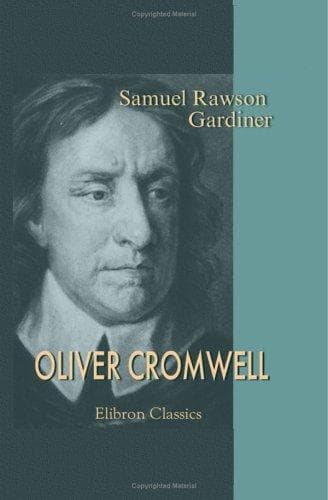
Cromwell, Oliver, 1599-1658; Great Britain -- History -- Commonwealth and Protectorate, 1649-1660
The necessity--according to these conditions--of coming to an
understanding with Charles, made Scotland little dangerous for the
moment, and enabled the English Parliament to turn its attention to
Ireland, to which Charles I. had looked hopefully after the failure
of the Hamilton invasion. Ormond, who had formerly headed Charles's
partisans in Ireland, now returned to that country as the King's
Lord Lieutenant, and brought under his leadership, not only his old
followers, but the army of the Confederate Catholics. Though Owen
O'Neill, at the head of an army raised amongst the Celts of Ulster,
kept aloof, the way seemed open for Ormond to attack Dublin, which was
now guarded by a Parliamentary garrison under Michael Jones, and was
almost the only place in Ireland still holding out for England. As in
Scotland, so in Ireland, the question was not so much whether England
was to win forcible mastery over those portions of the British Isles
outside her borders, as whether they were to be used to determine the
political institutions of England herself. The attacks on Ireland and
Scotland, which were now to follow, were in a certain sense acts of
defensive warfare.
To no man more than Cromwell was this thought present. An Englishman of
Englishmen--his bitterest complaint against the late King had been that
he had attempted to 'vassalise' England to a foreign nation, and when
on March 15 he was named to the command, he explained to his brother
officers the reasons which inclined him to accept the post. "Truly,"
he said, "this is really believed:--If we do not endeavour to make
good our interest there, and that timely, we shall not only have our
interest rooted out there, but they will, in a very short time, be able
to land forces in England and put us to trouble here; and I confess I
have these thoughts with myself that perhaps may be carnal and foolish:
I had rather be overrun with a Cavalierish interest than a Scottish
interest; had rather be overrun by a Scottish interest than an Irish
interest, and I think of all this is most dangerous; and, if they shall
be able to carry on their work, they will make this the most miserable
people in the earth; for all the world knows their barbarism--not
of any religion almost any of them, but, in a manner, as bad as
Papists--and truly it is thus far that the quarrel is brought to this
State that we can hardly return into that tyranny that formerly we were
under the yoke of ... but we must at the same time be subject to the
kingdom of Scotland and the kingdom of Ireland for the bringing in of
the King. Now it should awaken all Englishmen who perhaps are willing
enough he should have come in upon an accommodation; but now he must
come in from Ireland or Scotland."
Public-domain text, read in full here on John Shaqi.
Reviews
Reviews
No reviews yet
Be the first to share your thoughts on this work.
Elsewhere in the archive
Join the Discussion
Join the discussion
Sign in to leave a comment or review.
Sign InorCreate an account