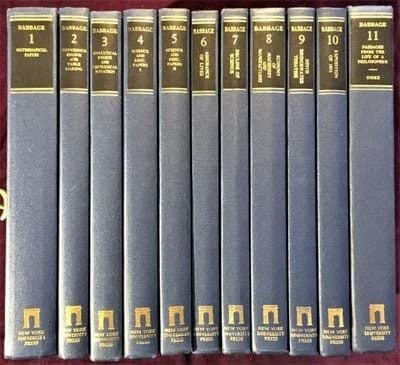
On the Economy of Machinery and ManufacturesBabbage, Charles
ReligionComparative
On the Economy of Machinery and Manufactures
Babbage, Charles
Machinery; Manufactures
355. It is usual in many workshops, that, on the first
entrance of a new journeyman, he shall pay a small fine to the
rest of the men. It is clearly unjust to insist upon this
payment; and when it is spent in drinking, which is,
unfortunately, too often the case, it is injurious. The reason
assigned for the demand is, that the newcomer will require some
instruction in the habits of the shop, and in the places of the
different tools, and will thus waste the time of some of his
companions until he is instructed. If this fine were added to a
fund, managed by the workmen themselves, and either divided at
given periods, or reserved for their relief in sickness, it would
be less objectionable, since its tendency would be to check the
too frequent change of men from one shop to another. But it
ought, at all events, not to be compulsory, and the advantages to
be derived from the fund to which the workman is invited to
subscribe, ought to be his sole inducement to contribute.
356. In many workshops, the workmen, although employed on
totally different parts of the objects manufactured, are yet
dependent, in some measure, upon each other. Thus a single smith
may be able to forge, in one day, work enough to keep four or
five turners employed during the next. If, from idleness or
intemperance, the smith neglects his work, and does not furnish
the usual supply, the turners (supposing them to be paid by the
piece), will have their time partly unoccupied, and their gains
consequently diminished. It is reasonable, in such circumstances,
that a fine should be levied on the delinquent; but it is
desirable that the master should have concurred with his workmen
in establishing such a rule, and that it should be shown to each
individual previously to his engagement; and it is very desirable
that such fine should not be spent in drinking.
357. In some establishments, it is customary for the master
to give a small gratuity whenever any workman has exercised a
remarkable degree of skill, or has economized the material
employed. Thus, in splitting horn into layers for lanterns, one
horn usually furnishes from five to eight layers; but if a
workman split the horn into ten layers or more, he receives a
pint of ale from the master. These premiums should not be too
high, lest the material should be wasted in unsuccessful
attempts: but such regulations, when judiciously made, are
beneficial, as they tend to produce skill amongst the workmen,
profit to the masters, and diminished cost to the consumers.
358. In some few factories, in which the men are paid by the
piece, it is usual, when any portion of work, delivered in by a
workman, is rejected by the master on account of its being badly
executed, to fine the delinquent. Such a practice tends to remedy
one of the evils attendant upon that mode of payment, and greatly
assists the master, since his own judgement is thus supported by
competent and unprejudiced judges.
Public-domain text, read in full here on John Shaqi.
Reviews
Reviews
No reviews yet
Be the first to share your thoughts on this work.
Elsewhere in the archive
Join the Discussion
Join the discussion
Sign in to leave a comment or review.
Sign InorCreate an account