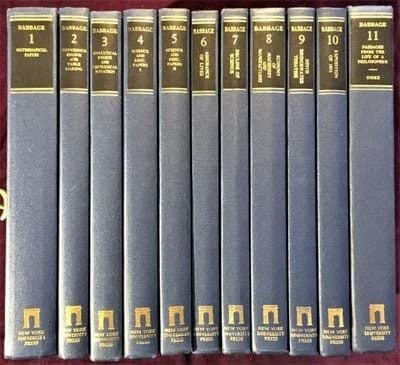
On the Economy of Machinery and ManufacturesBabbage, Charles
ReligionComparative
On the Economy of Machinery and Manufactures
Babbage, Charles
Machinery; Manufactures
Where the number of workmen living on the same spot is large,
it may be thought desirable that they should unite together and
have an agent, to purchase by wholesale those articles which are
most in demand, as tea, suger, bacon, etc., and to retail them at
prices, which will just repay the wholesale cost, together with
the expense of the agent who conducts their sale. If this be
managed wholly by a committee of workmen, aided perhaps by advice
from the master, and if the agent is paid in such a manner as to
have himself an interest in procuring good and reasonable
articles, it may be a benefit to the workmen: and if the plan
succeed in reducing the cost of articles of necessity to the men,
it is clearly the interest of the master to encourage it. The
master may indeed be enabled to afford them facilities in making
their wholesale purchases; but he ought never to have the least
interest in, or any connection with, the profit made by the
articles sold. The men, on the other hand, who subscribe to set
up the shop, ought not, in the slightest degree, to be compelled
to make their purchases there: the goodness and cheapness of the
article ought to be their sole inducements.
It may perhaps be objected, that this plan is only employing
a portion of the capital belonging to the workmen in a retail
trade; and that, without it, competition amongst small
shopkeepers will reduce the articles to nearly the same price.
This objection would be valid if the objects of consumption
required no verification; but combining what has been already
stated on that subject(1*) with the present argument, the plan
seems liable to no serious objections.
373. The truck system is entirely different in its effects.
The master manufacturer keeps a retail shop for articles required
by his men, and either pays their wages in goods, or compels them
by express agreement, or less directly, by unfair means, to
expend the whole or a certain part of their wages at his shop. If
the manufacturer kept this shop merely for the purpose of
securing good articles, at fair prices, to his workmen, and if he
offered no inducement to them to purchase at his shop, except the
superior cheapness of his articles, it would certainly be
advantageous to the men. But, unfortunately, this is not always
the case; and the temptation to the master, in times of
depression, to reduce in effect the wages which he pays (by
increasing the price of articles at his shop), without altering
the nominal rate of payment, is frequently too great to be
withstood. If the object be solely to procure for his workmen
better articles, it will be more effectually accomplished by the
master confining himself to supplying a small capital, at a
moderate rate of interest; leaving the details to be conducted by
a committee of workmen, in conjunction with his own agent, and
the books of the shop to be audited periodically by the men
themselves.
Public-domain text, read in full here on John Shaqi.
Reviews
Reviews
No reviews yet
Be the first to share your thoughts on this work.
Elsewhere in the archive
Join the Discussion
Join the discussion
Sign in to leave a comment or review.
Sign InorCreate an account